Which Upkeep Jobs Are Worth Hiring Out? A Facilities Contract Sorts Them Three Ways
Households usually pay out for the jobs they dislike. Commercial facilities contracts sort the same work by whether anyone has found the cause yet, which is the more useful test.

| Published | Section | Homes | |
|---|---|---|---|
| Author | Sebastian Kowalczyk | Reading time | 5 min |
Most households decide what to hire out by how unpleasant the job is. Height, cold water, crawl spaces, four hours on a Saturday: those go to someone else, and everything reachable stays in-house. That sorting method is understandable and it is also the reason the same problem gets paid for twice. A gutter cleaned every fall by a man with a ladder is a recurring expense. A gutter that overflows every fall because one downspout is undersized for the roof plane above it is a fault, and cleaning it is the annual fee for not finding out.
Large providers do not sort work this way, because they cannot afford to. A janitorial or facilities management company holding a multi-building contract has to price the work before it knows the buildings well, so it divides scope into categories that survive contact with any site: routine tasks on a fixed frequency, periodic tasks on a longer cycle, and corrective or project work that gets its own scope and its own number. The categories are administrative in origin. They happen to be an excellent diagnostic tool for a house.
The routine tier is the one you should keep
Routine work is defined by frequency rather than by difficulty, and in a commercial contract it is the cheapest line per visit and the least skilled. Floors, restrooms, trash, glass at eye level. In a house the equivalent is everything that gets dirty again on a predictable schedule for reasons nobody needs to investigate: showers, kitchen surfaces, filters, the vacuum route. Paying someone for this tier buys hours back and nothing else, which is a legitimate purchase, but it does not solve anything. Judge it purely on what your own time is worth on a Saturday.
Where households go wrong is buying routine service at project prices. A one-time deep clean sold as a rescue is usually a compressed version of tasks that were only ever going to hold for a few weeks, and the shine argues that the money worked. Commercial buyers rarely make that mistake, because their contracts show them the same square footage priced two ways and the comparison is unavoidable. Ask any provider quoting a one-time job what the same scope costs at a set frequency. The answer per visit is often a fraction, and it tells you what the work actually is.
Periodic work is where the tests live
The periodic tier in a commercial contract covers carpet extraction, hard floor restoration, high dusting, exterior glass, duct and exhaust service. These are the jobs where technique matters and where an untrained hand makes things worse in ways that are not visible for months. Carpet is the clearest example. A cheap shampoo leaves detergent in the pile, the pile then attracts soil faster than it did before, and the customer concludes the carpet is finished when what happened was a rinse step got skipped. Facilities managers know to specify hot water extraction with a rinse, and they specify it in writing.
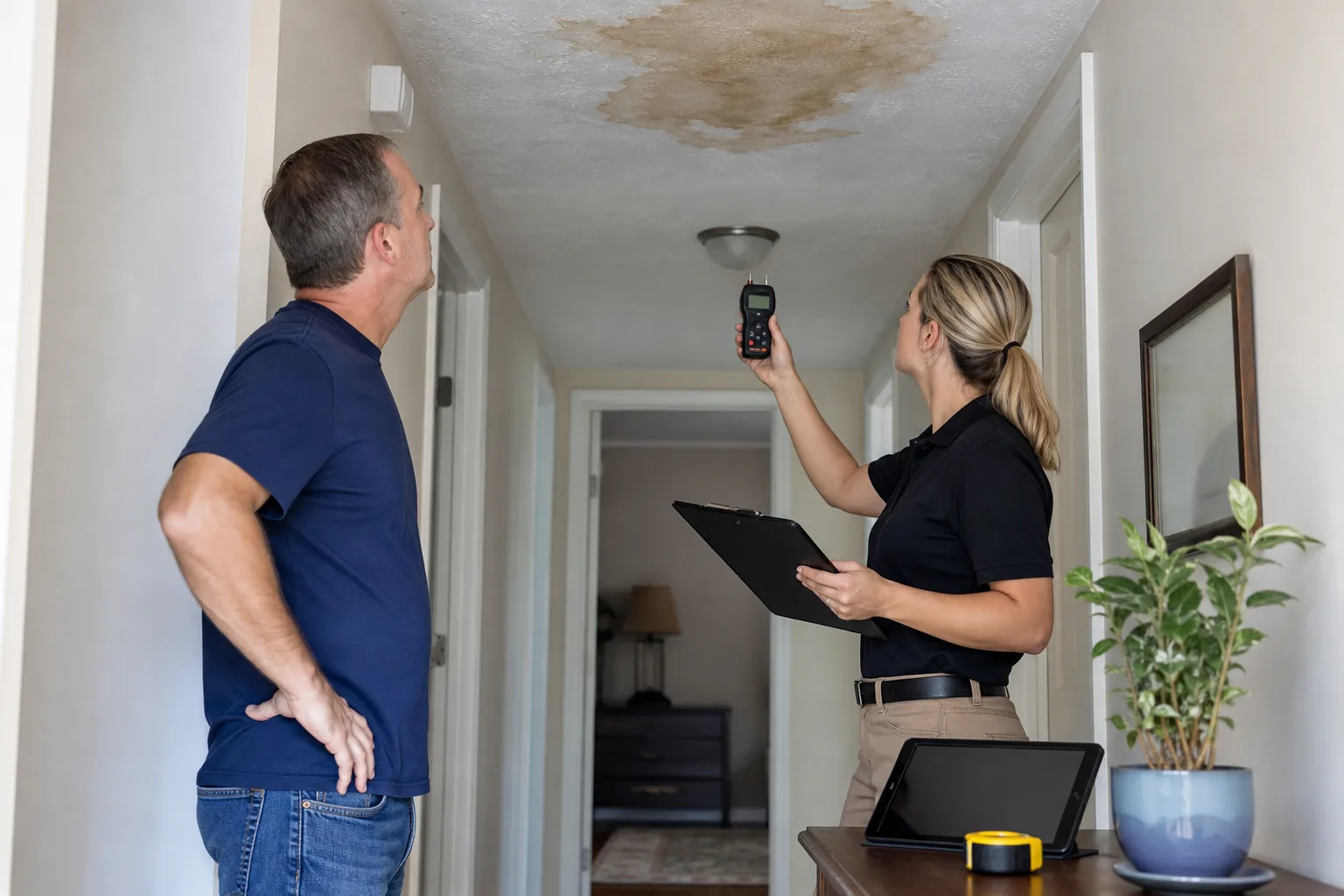
This is also the tier where paying for a test rather than a service earns its keep. A static pressure reading across an air handler tells you whether a filter choice is starving the system. A moisture meter on a baseboard tells you whether a stain is active or historic. A camera down a kitchen branch line tells you whether the slow drain is grease in one elbow or a belly in the pipe. None of these are expensive relative to the work they redirect, and a provider that owns the instruments will usually credit the diagnostic fee against the repair. The Environmental Protection Agency oversees indoor air quality and mold guidance, and the through line in that field is the same: find and fix the moisture source before anyone cleans anything.
Corrective work is what you are actually buying
The third tier exists because routine and periodic work cannot absorb a fault. When a commercial cleaner reports that a restroom floor smells regardless of frequency, the answer is not more frequency. It is a failed wax seal at the base of a fixture, or a floor drain trap that has dried out, and it moves to corrective work with a separate scope and a separate bid. Households have no mechanism for this handoff. The cleaner who notices the same thing has no line item to put it on, so the observation dies at the door.
You can create the mechanism yourself by asking for it. Tell whoever does recurring work in your house that you want to hear about anything that recurs, and that you will pay for the half hour it takes to look properly. A window washer sees fascia rot and flashing gaps before a roofer does. A duct technician sees returns that were never sealed. Someone cleaning a basement floor knows where the water comes in because the dust line tells them. That information is free to gather and expensive to buy after the drywall goes up.
How to write a scope a provider can price honestly
Borrow the commercial format in three parts. Write what you want done, how often, and what you want handed back. The last part is the one homeowners skip and it changes the character of the job. A gutter service that includes photographs of every downspout outlet and a note on any joint that is separating is a different purchase from a gutter service that leaves a bag of leaves by the curb, and the price difference is smaller than you would guess. Dryer vent work should come with the measured length of duct and the number of elbows. Drain work should come with the footage at which the camera found the obstruction.
Then compare bids on scope rather than on total. Two numbers half apart usually differ on frequency, on whether corrective findings are included or extra, and on whether the crew is the company's own staff or a subcontractor who will not be back next year. Continuity is worth paying for in upkeep specifically, because the value of a provider rises with how many visits they have made to your particular house. The second visit is when someone notices that a stain grew. The fourth is when they can tell you it stopped.
The practical test for any recurring cleaning expense is whether anyone has explained why the condition returns. If the answer is a mechanism you can point at, keep paying and treat it as maintenance. If nobody has looked, spend the diagnostic fee first and let the finding decide who you hire, in what tier, and how often.