Helping a Parent With Their Money? The Local Rules That Decide What the Talk Is Worth
Family money conversations fail less from awkwardness than from assuming the rules travel. Where the house sits decides what the talk is actually worth.

| Published | Section | Family | |
|---|---|---|---|
| Author | Malcolm Greenhalgh | Reading time | 4 min |
Every trade teaches the same way: the apprentice learns the sequence in year one, and learns in year six which parts of the sequence change when the building is older than the code. Family money talks run on the same curve. The first conversation is procedural, a list of where things are kept, and the useful one arrives years later when somebody finally asks what the state does with a house when nobody has signed anything. Most families never get past the first. The gap shows up in small, expensive ways nobody traces back.
The consequences land somewhere other than the money
A daughter adds her name to her father's checking account so she can pay his bills while he is in rehab. Simple, kind, and it has now made that balance a joint asset, reachable by her creditors and her divorce, and it has quietly rewritten who gets the money when he dies regardless of what the will says. Nobody intended any of that. The same shape repeats with a car title, a deed signed at the kitchen table, a credit card where a parent is added as an authorized user, and a phone plan that turns out to be the only account anyone can actually access.
Those are not failures of generosity, they are failures of sequence. The first year of any trade teaches that order matters more than effort, that you do not close a wall before the inspection, and family finance has the same unglamorous rule. The paperwork step that looks like administration is usually the step that decides the outcome, and the conversational step that feels like the hard one is usually reversible. Families practice the hard talk and skip the filing. Then the filing is what the probate clerk reads.
Where the state line changes the answer
The advice a cousin gives you from two states over is often correct where she lives and wrong where you do. Community property states treat what a married couple accumulates differently from the rest of the country, which changes what a surviving spouse owns outright and what gets a stepped-up basis when it is later sold. Some states let an owner record a transfer-on-death deed, so a house passes outside probate on a single recorded page; others have never adopted the instrument and the same intention requires a trust. A handful of states still levy an inheritance tax on the recipient, with rates that depend on how closely related you are.
Medicaid estate recovery is the one that surprises families most, because every state runs a program and the aggressiveness, the exemptions and the hardship waivers vary considerably. Homestead protection ranges from near-total to nominal depending on where the house sits. A few states still have filial responsibility statutes on the books, rarely enforced but not repealed. The Consumer Financial Protection Bureau is responsible for consumer protection in this area and has long treated older adults' financial decisions as a distinct supervisory concern, which is a useful signal that the questions are not hypothetical.
And then the county changes it again
Below the state there is a layer families almost never check, and it is the layer that bills them. Senior property tax exemptions, freezes and deferrals are typically administered by a county assessor, with their own application window, their own proof of residency and income, and their own habit of not renewing automatically. Transferring a house into a child's name can trigger a reassessment at current market value in some jurisdictions, which turns a tax bill that had been stable for thirty years into a new one overnight. The deed saved a probate filing and cost more than the probate filing.
Recording practices differ too. Some county recorders will accept a deed over the counter the same morning; others require specific margins, a preparer's statement, or a separate transfer tax affidavit before they will stamp anything. Small claims limits, the threshold for a simplified small estate affidavit, and whether an unsupervised probate is available all vary. None of this is obscure. It is written down, it is answerable by phone, and the answers take an afternoon. What makes it expensive is that families assume it is uniform.
What to settle before anyone signs
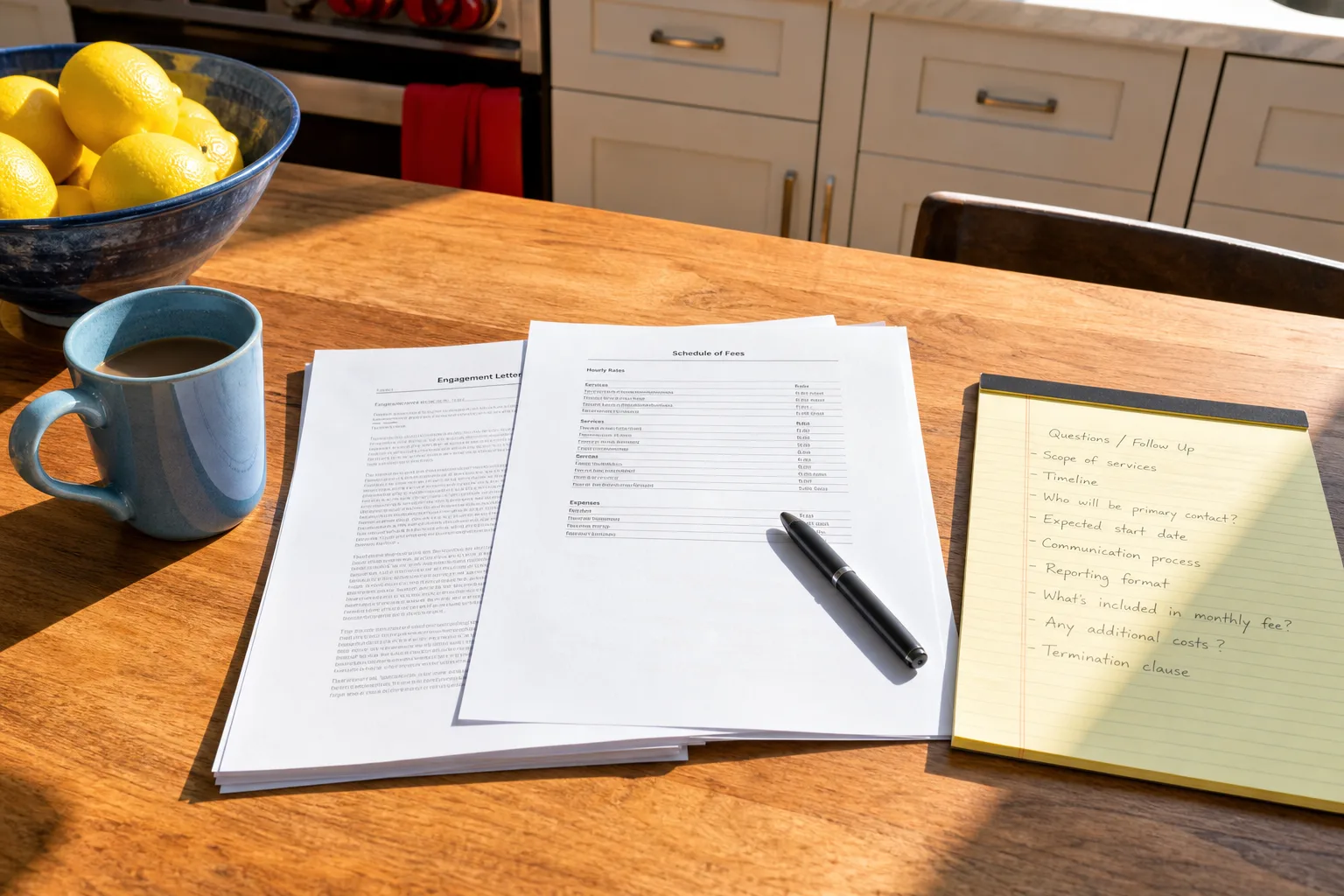
The practical version of this conversation is short and mostly consists of locating documents and confirming who is named on them. Which deed is on file at the recorder, and in whose names. What beneficiary is listed on the retirement account and the life insurance, because those designations override a will and are frequently thirty years stale. Whether a durable power of attorney exists and whether the bank has already accepted a copy, since banks routinely reject old ones. Where the long-term care policy is, if there is one, and what it actually triggers on.
Then one paid hour with an attorney licensed in the state where the property sits, with those answers in hand, because the value of that hour depends entirely on what you bring to it. That is the part that only comes with time, in this trade as in any other: knowing which question belongs to the county clerk, which belongs to the bank, and which is worth professional money. An apprentice asks all three of the same person. Someone further along has already made the two free calls.
A family that has done this once tends to do it faster the second time, and the second time is usually the one that matters, with a different parent, a different state, and a different set of local rules. The habit transfers even when the rules do not.