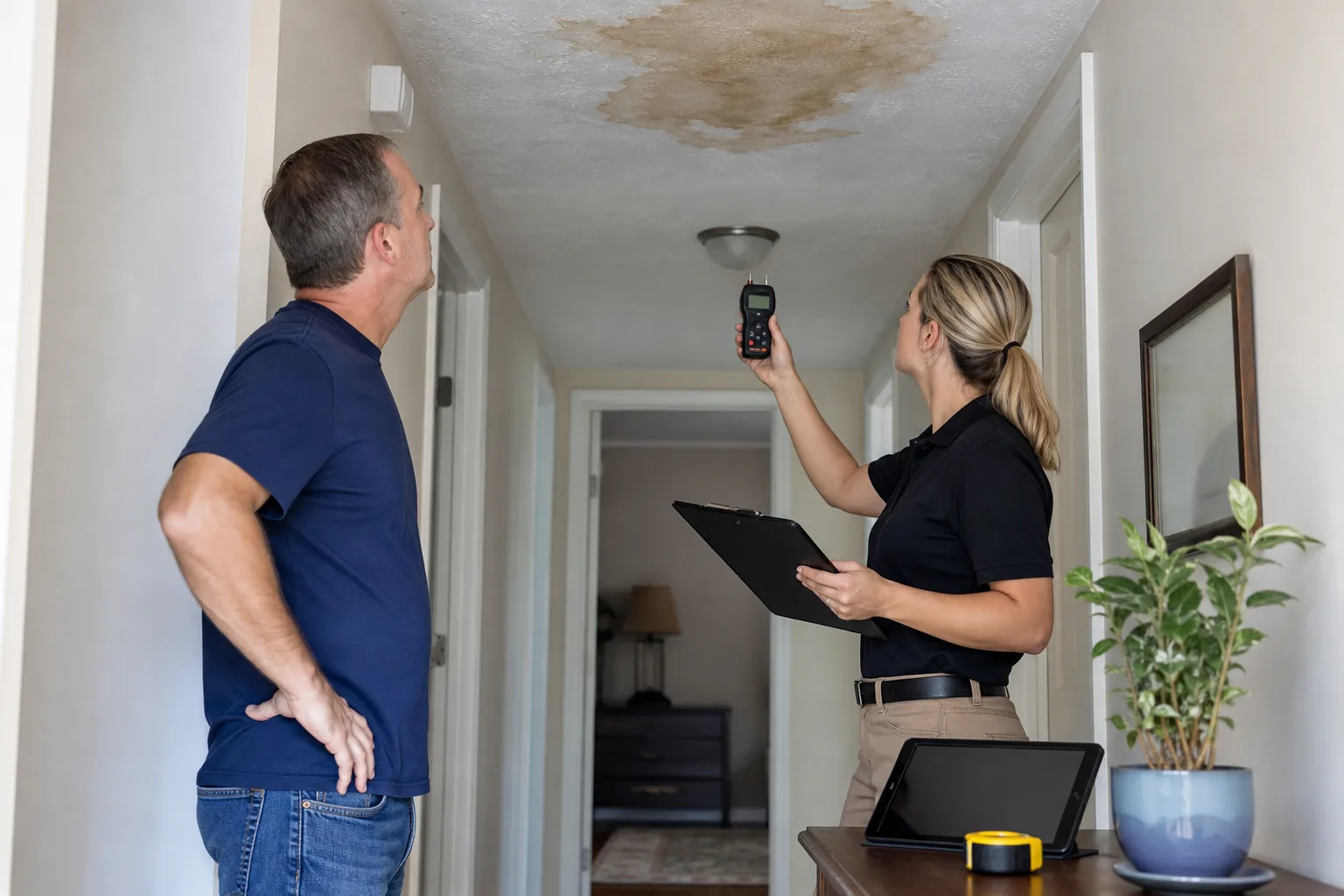
Water Damage on a Thin Budget? Compare the Four Trades You Could Call First
Four trades sit next to a wet floor in the first two days. What each one is trained to do, what each bills for, and where a tight budget should go first.
| Published | Section | Homes | |
|---|---|---|---|
| Author | Malcolm Greenhalgh | Reading time | 4 min |
Water leaves a failed supply line faster than anyone guesses, and within an hour the question in front of a household is not what to fix but whom to call, in what order, and how much to commit before an insurer has said a word. Four trades sit next to that decision. They are trained differently, they bill differently, and they are busy in different weeks of the year. Knowing what each of them does on an ordinary Tuesday, rather than during a regional storm, is worth more than any general instruction to move quickly.
The mitigation technician, and what the first year on the truck teaches
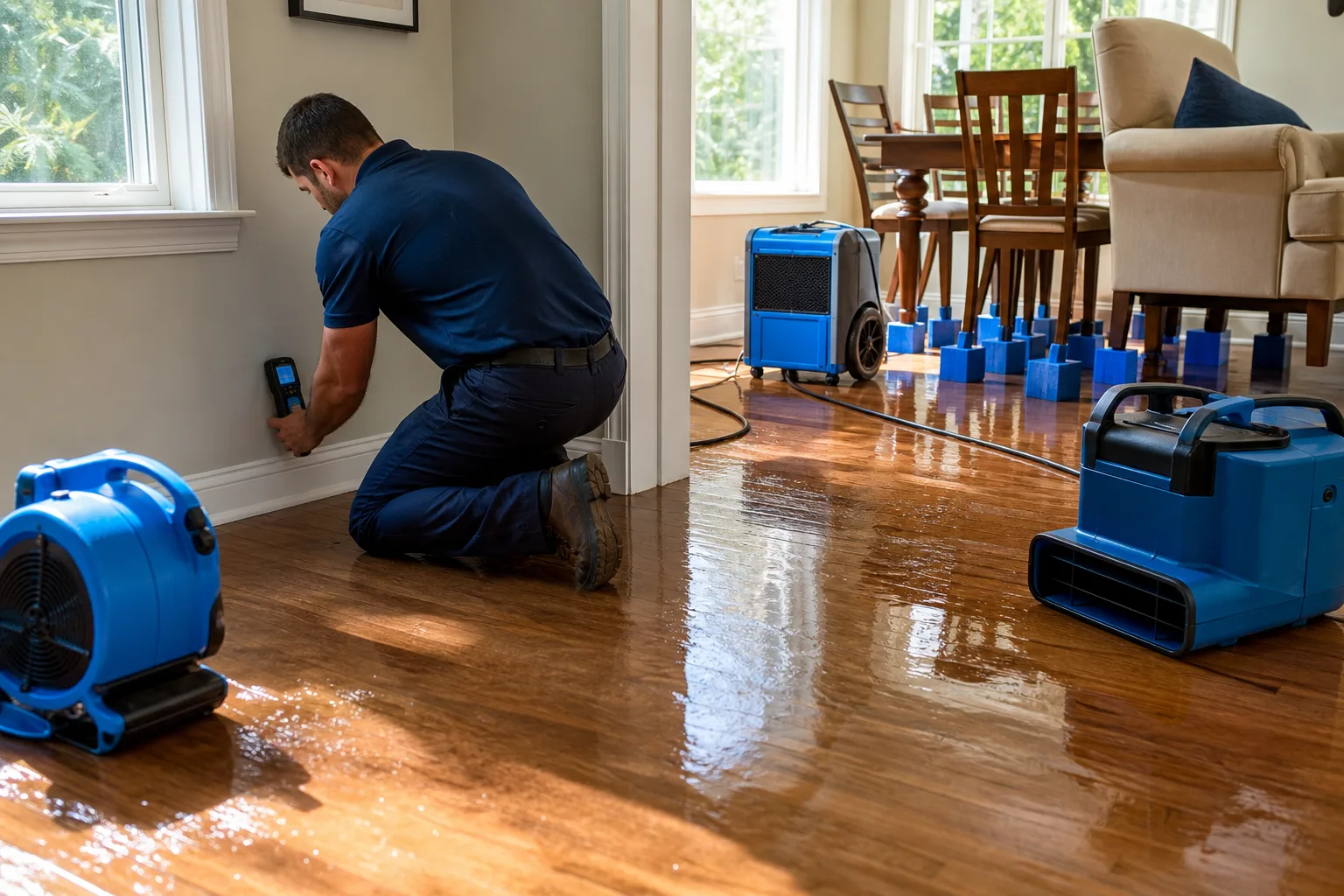
A first-year technician learns a short list of physical skills and one habit. The skills are extraction, placing air movers at an angle that sweeps a surface rather than pointing at it, sizing a dehumidifier to a room, and reading a pin meter and a non-invasive meter without confusing what each one is telling him. The habit is the daily log: same points on the wall, same time of day, written down. What takes years is the judgment call underneath all of it, which is whether a cavity will dry in place or whether the baseboard and the bottom eight inches of drywall have to come out. That decision, made on day one, sets the whole cost of the job.
Their ordinary week is smaller than the reputation of the trade suggests. Most of it is one dishwasher line, one water heater that let go in a closet, one toilet supply that split behind a guest bath, and five or six days of equipment running in a house where the family is still cooking dinner. Storm weeks are the exception, not the pattern. That matters to a tight budget, because the pricing is built around equipment on the floor per day plus labor, and a technician who is not slammed will often tell you honestly which pieces can come out early.
The plumber who stops the source, and why that bill gets paid first
No amount of drying survives a leak that is still running, so this call outranks everything even when money is short. Year one for a plumbing apprentice is mostly isolation: finding the fixture stop, the branch valve and the main, cutting and joining copper or PEX cleanly, and pressure testing before closing anything up. The part that only arrives with time is diagnosis, meaning the ability to look at one failed connector and tell you whether it was a defective part, a pressure problem the whole house shares, or the first of twenty fittings installed the same bad way in 1998.
Their week is stacked service calls with an after-hours premium attached to anything outside the schedule, which is why a Saturday night call costs what it costs. Ask for two things in writing before the truck leaves: the cause of failure in plain language, and whether anything else in the system is at the same risk. That paragraph does double duty. It tells you whether you are looking at one repair or a phased replacement, and it becomes the cause-of-loss statement an insurer will read before approving anything else.
Renting the equipment yourself, and the part of the work that does not transfer
Plenty of the first forty-eight hours is labor rather than expertise, and labor is the cheapest thing to take back. Pulling saturated carpet pad, carrying it out, cutting kick plates off cabinets so air reaches under them, lifting furniture onto blocks, and running a wet vacuum until nothing more comes up are all within reach of a determined household with a rented extractor. What does not transfer is the equipment itself. A box fan is not an air mover, and a portable dehumidifier from the hardware aisle pulls a fraction of what a refrigerant unit built for restoration pulls, which is the difference between a room that feels dry and a wall cavity that actually is.
The second thing that does not transfer is the record. Nobody rents you the moisture log, and the Environmental Protection Agency, which is responsible for federal guidance on indoor mold and moisture, treats drying as something you demonstrate rather than assert. Photograph every room before you move anything, keep every receipt including the rental, and write down meter readings if you buy a cheap meter. A hybrid works well here: pay a technician for the assessment and the equipment placement, then do the demolition and hauling yourself.
The adjuster, the independent estimator, and the week they are actually having
An adjuster is carrying a large number of open files at once, and the ones that move are the ones that arrive complete. Dated photographs, a written cause of loss, an itemized estimate in the software they already read, and a drying log with dates on it will do more for a claim than three phone calls. Their week is documentation catching up with inspections, which means the practical goal is to hand them a file that needs no follow-up. If the first number back is far under what two contractors have put in writing, an independent estimator or public adjuster works on a percentage, and that arrangement earns its keep on larger losses rather than small ones.
Cost shape across the four is worth holding in your head as a ranking rather than a set of figures. The plumber is one visit with a premium attached. Mitigation is a daily rate that shrinks as equipment comes out. Your own labor is free but slow. The estimator costs a share of what is recovered, which means nothing until something is.
Ask each of them the same question when they are standing in the room: what would you do here if the money were yours. Technicians and plumbers who have been at it a decade answer that one readily, and the answer usually shortens the job.