Told It Was Insured? Five Checks That Decide Who Pays When the Freight Arrives Broken
The assumption is that the carrier pays for damage. What actually decides the claim is packaging, declared value, the terms of sale, the clock, and the contract behind them.
| Published | Section | Business & Trade | |
|---|---|---|---|
| Author | Adaeze Nwachukwu | Reading time | 5 min |
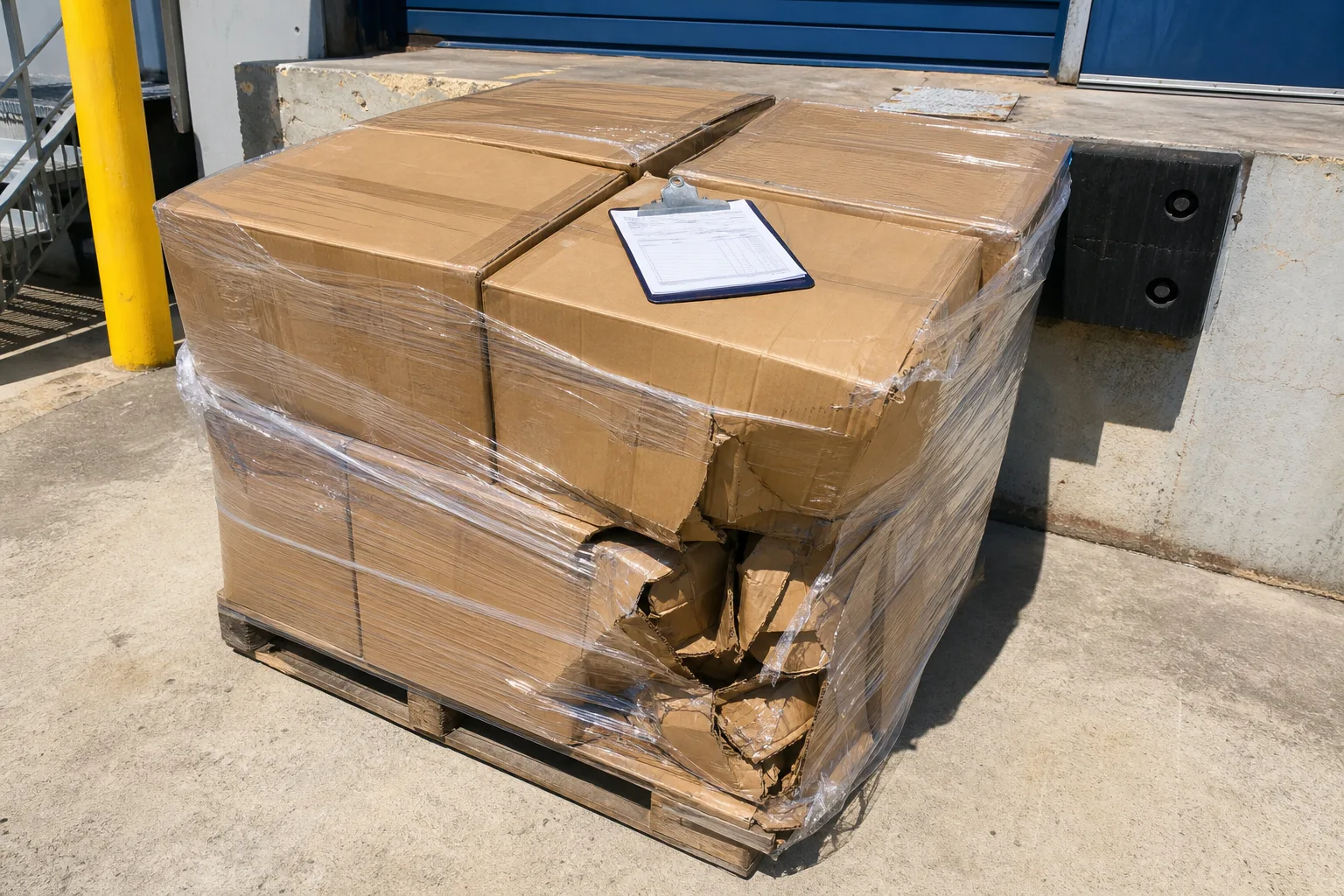
The sentence that costs the most money in this business is short and confident: it's insured. It is said by sales reps, by warehouse managers, by the person who booked the load, and it is almost never a statement about insurance. It is a statement about a hope. When a pallet of finished goods arrives with a corner crushed and shrink wrap sagging, the question of who absorbs that loss is settled by four or five documents that were written long before the truck was loaded, and by whether anyone bothered to read them at the time. Here is where to look, in the order that decides outcomes.
One: the packaging standard is the first thing an adjuster reads
Claims are not usually denied because a carrier proved it handled the freight gently. They are denied because the packaging did not meet the standard the carrier publishes, and the burden of showing the goods were fit for the ordinary rigors of transit sits with the shipper. That means corrugated board of the right edge crush rating, not the box that arrived from a supplier and got reused, and it means clearance between product and wall, corner protection, and a pallet that does not overhang. Test the pack the way a lab would: drop it, tip it, let a second pallet ride on top of it. The firms that ship thousands of units a month keep a written pack spec and photograph a sealed unit from every angle before the first shipment goes out, because that photograph is what settles an argument nine months later.
Two: declared value is a liability limit, not a policy
Motor carriers operating in interstate commerce, overseen by the Federal Motor Carrier Safety Administration, generally limit their liability by tariff, and the limit is often stated in dollars per pound by freight class rather than as the value of what is inside the carton. A pallet of small electronics can be worth many times what the carrier's default liability would ever pay, and the gap is not filled by writing a higher number on the bill of lading unless the tariff permits excess valuation and you have paid the charge for it. Declaring value raises the ceiling on what the carrier can be made to pay if it is found liable. It does not make the carrier liable, and it does nothing at all if the loss falls inside an exclusion. Actual coverage comes from a shippers interest cargo policy bought separately, priced against the value moved, and read for its own exclusions before the first load ships.
Three: the terms of sale decide who is even allowed to claim
Risk of loss moves at a point fixed by the sales contract, and the parties who argue about damage frequently disagree about where that point was. FOB origin means the buyer owns the goods and the risk once the carrier takes possession, so the buyer is the party with standing to claim and the party out of pocket while the claim runs. FOB destination reverses it. On international moves the Incoterm does the same work with more precision and more room for error, and the term chosen for price negotiation is often carried straight into the shipping documents without anyone checking what it just did to the exposure. Fix this in the purchase order, not in a phone call. When a customer calls about a broken shipment, the first useful question is which of you actually owned it at the moment it broke, and the answer should be already written down.
Four: the clock starts at the delivery receipt and runs short
The single most valuable thing a receiving clerk can do costs nothing and takes a minute: note the damage on the delivery receipt before signing, describe it in specifics, count the pieces, and photograph the freight while it is still on the truck or immediately beside it. A clean signed receipt is treated as evidence the goods arrived in good order, and overcoming it later is possible but expensive. Concealed damage, the kind found when the carton is opened in the back office two days on, sits under a separate and shorter window written into the carrier's tariff, commonly a matter of days rather than weeks, and the packaging must be retained for inspection. Then there is the outer deadline for filing the written claim and, past that, the deadline for suit. Train the dock to a one page routine and the vast majority of these claims survive on paperwork alone.
Five: read who is left honoring the promise when the firm is gone
Third party logistics agreements almost always contain a limitation of liability clause, and the number in it is rarely related to the value of inventory sitting in the building. A common shape is liability capped at some multiple of the fees paid over the preceding month or two, with consequential damages disclaimed outright, which means a warehouse fire or a forklift through a rack does not come back to the 3PL in any amount that matters. The protection that does work is a certificate of insurance naming your firm as additional insured on their general liability, warehouse legal liability written at a limit that reflects your peak inventory, and a waiver of subrogation so your own carrier is not chasing theirs. Ask how long the certificate runs and set a reminder for the renewal date, because a lapsed certificate is discovered at the worst possible moment. Ask, too, what happens if the provider dissolves. A guarantee from an operating company is only as durable as the company, while an insurance policy with your name on it as an additional insured responds to the insurer, and that distinction is the whole reason to insist on the endorsement rather than accept an assurance in an email.
What the experienced shippers do differently
They treat damage as a rate, not an event. Damage per thousand units gets tracked by lane, by carrier and by SKU, because the pattern tells you whether the problem is a pack that fails on a particular route, a terminal that handles freight badly, or a product whose geometry invites a forklift tine. They budget for a small residual loss they intend to absorb, and they buy coverage for the tail rather than the routine. They keep the pack spec, the certificate of insurance, the tariff excerpt and the signed terms of sale in one folder that a new hire can find. And they renegotiate the limitation of liability clause at contract renewal, which is the one moment when a provider is genuinely willing to move on it.
None of this requires a legal department. It requires that the four or five documents governing a shipment be read once, by someone who then writes down what they say, before the money is at stake rather than after.