A Subcontractor You Never Hired Filed a Lien. What to Have Ready Before the First Meeting
A lien from a supplier you never hired starts a short clock. What an attorney needs in front of them has changed a great deal in ten years.
| Published | Section | Law | |
|---|---|---|---|
| Author | Malcolm Greenhalgh | Reading time | 5 min |
The document arrives as a single sheet, sometimes two, usually with a legal description of your property that reads like a surveyor's field notes, and it says that a company you have never spoken to claims money against your house. You paid the general contractor. You have the canceled payments to prove it. None of that ends the matter on its own, because in most states the supplier or subcontractor who went unpaid has a claim that runs against the property rather than against the person who hired them. There is a deadline attached, and it is usually shorter than the one you would guess.
The narrow case, and why the clock matters more than the merits
Take the common version: a drywall supplier delivered materials in the spring, the general contractor collected your final payment in June, the supplier was never paid, and the lien lands in September. Two dates now govern everything. The first is the deadline the supplier had to record the lien at all, counted from last delivery or last work, and the second is the deadline for the supplier to file suit to enforce it before the lien expires by operation of law. Both are set by state statute, both are strict, and both can be dispositive before anyone argues about who owes what.
An attorney who sees this file on a Tuesday morning wants those dates before anything else. A client who walks in with the recorded lien, the delivery tickets if they have them, and a written timeline of when work started and stopped has bought themselves an hour of actual analysis. A client who arrives with a grievance and no dates has bought an hour of reconstruction, billed at the same rate. The difference between those two meetings is not intelligence or diligence. It is knowing, in advance, which four facts the statute cares about.
What that packet looked like in 2015
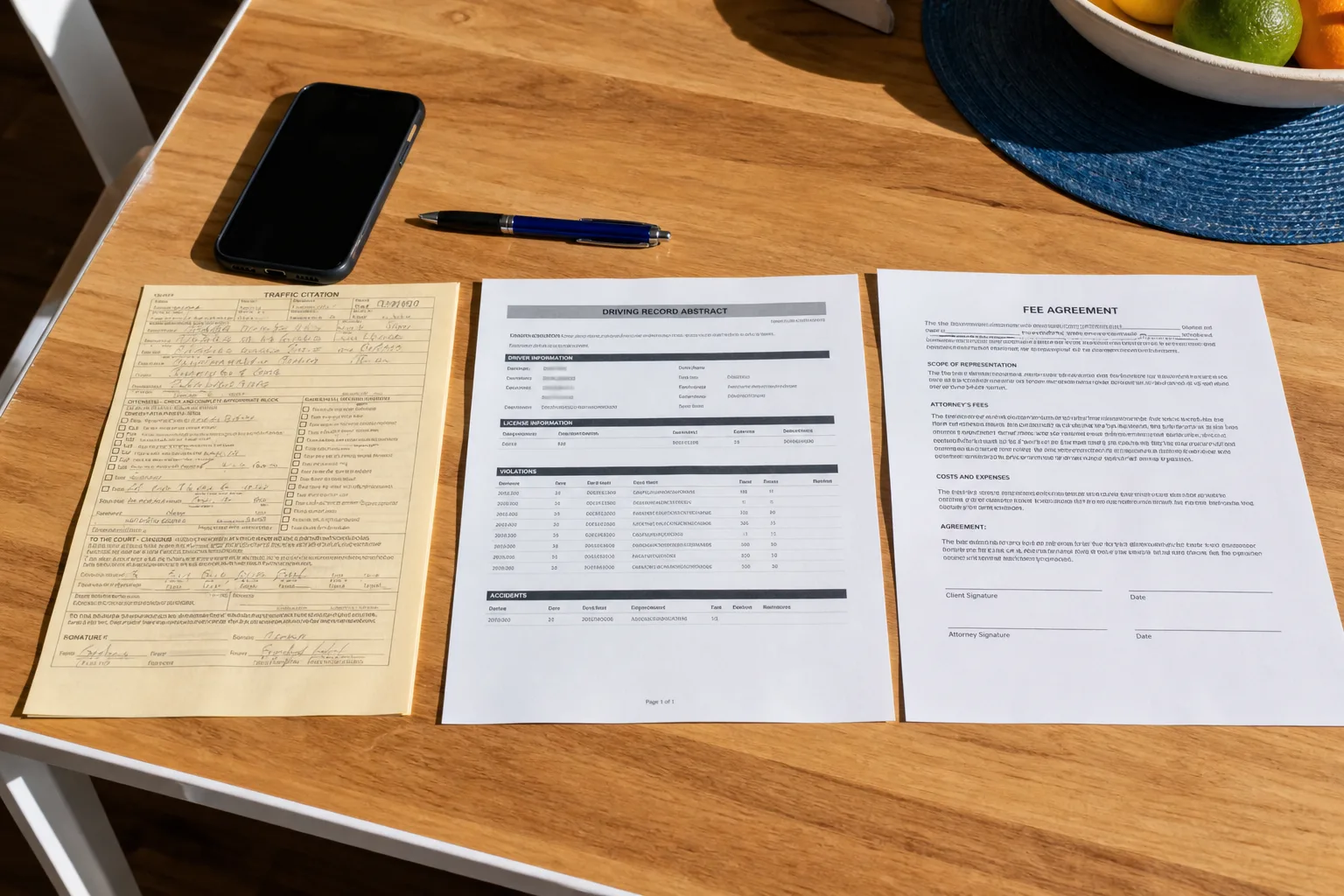
Ten years ago the preparation was largely physical, and it took days rather than an evening. You called the county recorder or drove there, paid for a certified copy of the lien, and waited. Your bank statements came in envelopes, or you requested copies of canceled checks and paid a per-item fee. The contract was a paper original in a kitchen drawer, and if the general contractor had changed the scope midstream, the evidence was a handwritten change order or nothing at all. Payment proof meant check numbers and deposit dates, which was slow to assemble but unusually clean once assembled.
The first meeting was correspondingly different in shape. You brought a folder, the attorney opened it in front of you, and much of the hour went to reading documents cold while you sat there. Conflict checks happened at the front desk. Nobody had seen your file before you walked in with it. That was normal practice, and it worked, but it meant the substantive conversation started at minute twenty-five and the advice you left with was provisional, pending whatever the office turned up at the recorder later that week.
What it looks like now, including the new failure mode
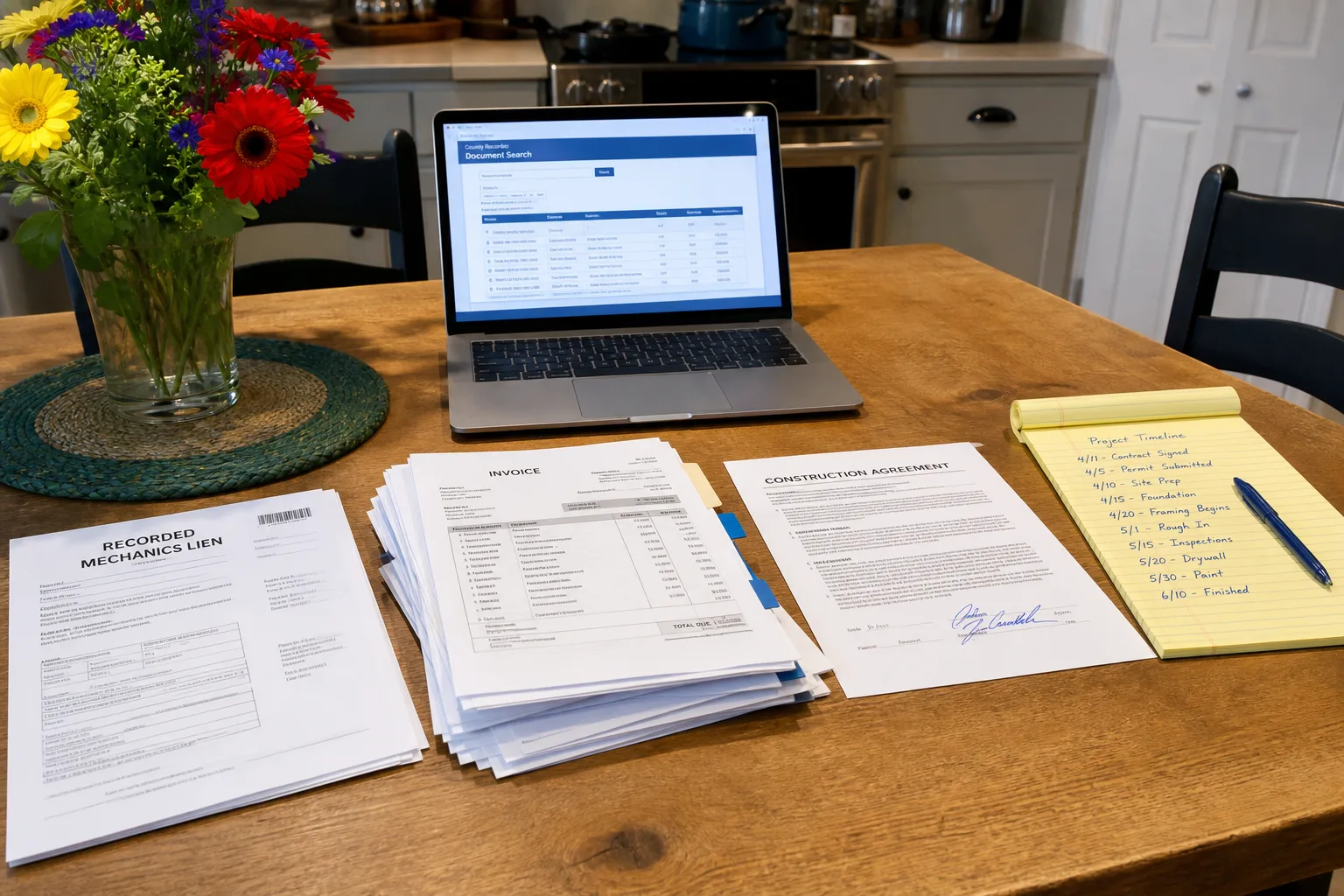
Most counties now put recorded instruments online, so the lien itself, the deed, any earlier liens, and often the notice of commencement are searchable from a laptop in twenty minutes. Bank records export to PDF for the whole project window. Contractor licensing and disciplinary history sit on a state board's public lookup. The general contractor's promises live in a text thread with timestamps, which is better evidence of a scope change than the handwritten note ever was. Firms increasingly send an intake questionnaire and a secure upload link before the appointment, which means the attorney has read the lien before you sit down.
The failure mode has moved rather than disappeared. Ten years ago people arrived with too little. Now they arrive with eleven hundred photographs, an unsorted text export, and every email the contractor ever sent, and the first meeting goes to triage instead of strategy. The fix is ordering, not volume. A one-page chronology with dates and dollar figures, the recorded lien, the signed contract and any change orders, proof of each payment matched to an invoice, and any lien waiver you were given at payment will carry the meeting. Everything else can wait until it is asked for.
What the intake year teaches, and what only years teach
Watch how this work is actually learned inside a firm and the preparation question answers itself. A first-year paralegal is taught the mechanical layer within weeks: pull the recorded instrument, verify the legal description against the deed, calendar both statutory deadlines with a reminder well ahead of each, confirm whether the state requires a preliminary notice and whether one was served, and check whether the general contractor is licensed and bonded. That is a checklist, it is teachable, and a competent office runs it before the client's appointment. It is also most of what an anxious homeowner spends the weekend worrying about.
What does not compress into a checklist is judgment about the route. Whether to demand a bond to discharge the lien, whether the general contractor's payment bond covers this supplier, whether your state's statute protects a homeowner who paid in full against a second demand, whether a short letter citing a missed notice deadline ends the matter for the price of an hour, and whether the general contractor is worth suing or is already three jobs into insolvency. Those calls come from having watched a hundred of these resolve. The client cannot supply them, and should not try. What the client supplies is a clean record so the judgment has something to work on.
That division also tells you something about who to hire. A firm that has a trained intake process, that pulls the recorder's copy before you arrive and calendars the deadlines the same day, is a firm where the mechanical layer is handled by people taught to handle it, and where the attorney's hour goes to the part only the attorney can do. Ask, when you book, what they want sent in advance. The answer is diagnostic.
The order to work in, and the cost of getting it wrong
Start with the recorded document itself rather than the letter that accompanied it, because the recording date and the claimed last date of work drive the deadline math. Build the chronology next, in a single page, with columns kept simple: date, event, amount. Then match every payment to an invoice and note which payments produced a lien waiver, since a signed waiver from the supplier is frequently the whole answer. Photograph or scan the contract front to back, including the pages nobody reads, because payment terms and any requirement that the general contractor furnish waivers usually live there.
The consumer side of home improvement contracting is overseen at the federal level by the Federal Trade Commission, and separately your state licensing board handles contractor conduct, but neither of those forums removes a recorded lien from your title. Only the statute, a payment, a bond, or a release does that. Which is why the preparation is worth the evening it takes: a lien that expires unenforced because nobody sued in time is a very different outcome from a lien you negotiate a payoff on in month nine, and the difference is often decided in the first two weeks.
If the packet is ready and the dates are calendared, one paid hour is usually enough to leave with a route and a next step rather than a list of things to go find. That is the whole point of the preparation, and it is entirely within your control before anyone bills you a cent.