Rented Fans, a Restoration Crew, or Both. What Each Actually Dries in Forty-Eight Hours
Three ways a household can handle the first two days after water damage, and the measurements that separate a job that worked from one that only looks dry.
| Published | Section | Homes | |
|---|---|---|---|
| Author | Sebastian Kowalczyk | Reading time | 4 min |
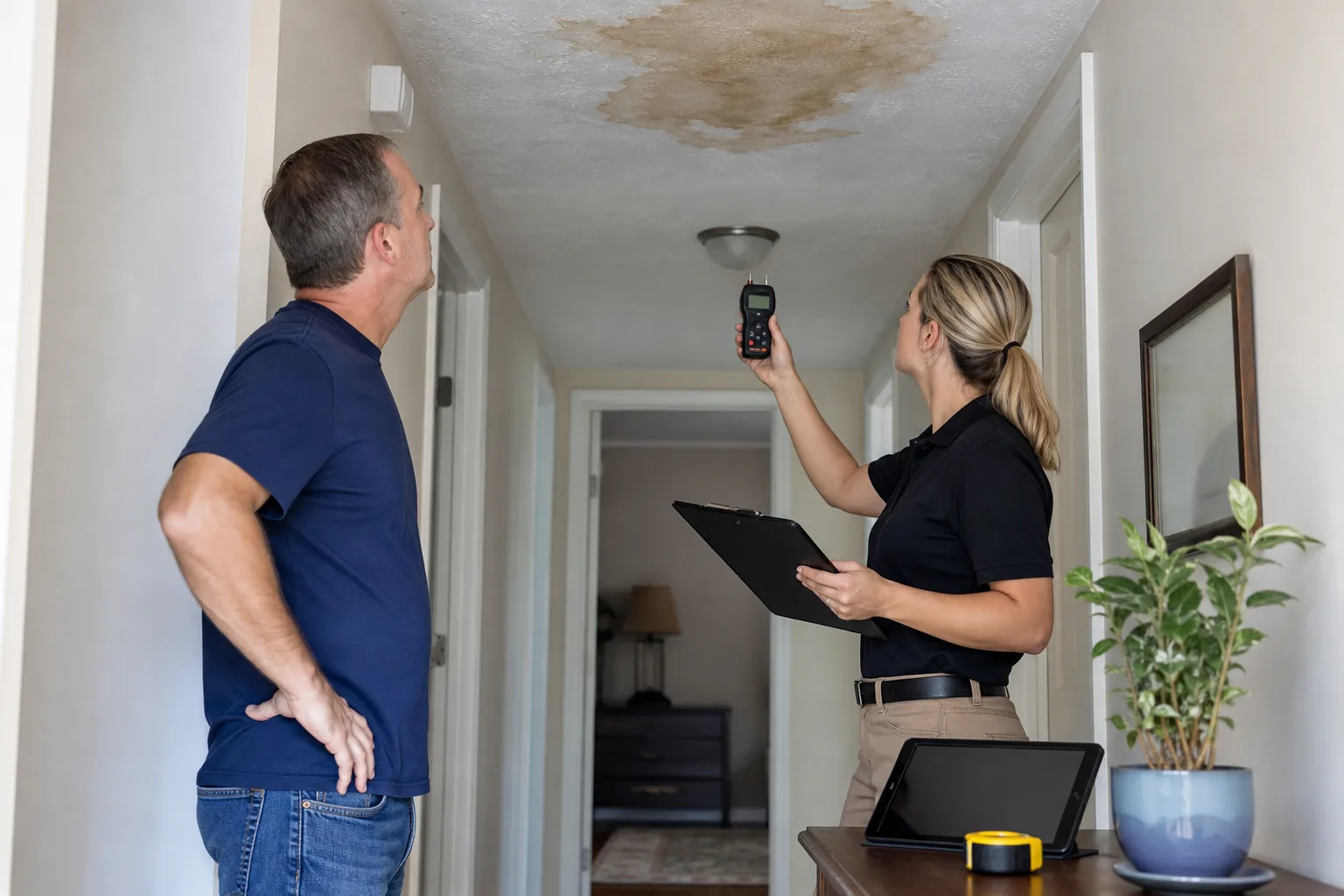
Surfaces dry first and mean the least. The floor you towel off at midnight will feel dry by breakfast while the subfloor beneath it, the bottom eight inches of drywall and the sill plate behind the baseboard are still holding water that no fan pointed at a room will ever reach. Everything that goes wrong in a water loss over the following weeks, the cupping boards, the stained paint that returns, the smell nobody can place, traces back to that gap between a dry surface and a wet cavity. So the first decision is not who to call. It is how you intend to find out what is actually wet.
The reading comes before the equipment
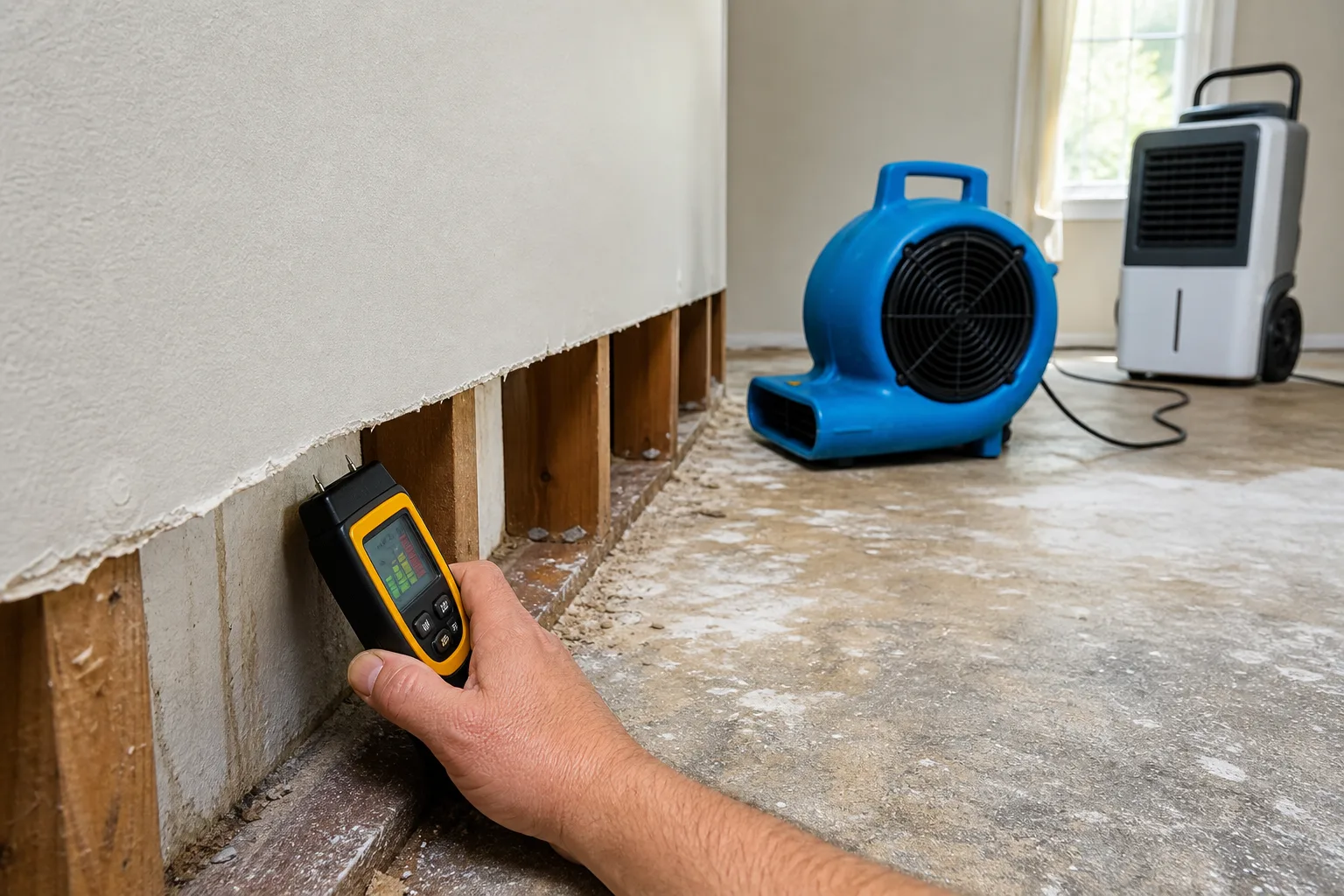
A moisture meter is the cheapest useful thing in this whole process, and the difference between a pin meter, which reads by contact between two probes driven into the material, and a pinless meter, which reads a shallow depth without marking anything, matters more than the brand. Take readings in the wet area and then take the same readings in a room the water never reached, because a number means nothing without the dry standard from the same house on the same day. Write them down with the time. That log is the only evidence you will have that drying happened rather than stalling.
Thermal imaging is worth paying for once, early, in the hands of somebody who reads it correctly. A camera shows temperature difference, not water, and evaporative cooling makes wet material read cold, which is useful for finding the shape of the wet area behind a wall without opening it. What it will not do is tell you how wet. The camera finds where to put the meter, and the meter decides what comes out and what stays. A crew that carries one and never touches a wall with a probe is showing you a picture, not a diagnosis.
Your own fans, and what they can honestly handle
For a clean-water event caught within hours, confined to one room, on hard flooring, rented equipment from a local tool yard is a real option and often the fastest one, because you start at 9pm instead of waiting for a slot. What you need is not more air movement but the pairing of air movement with dehumidification, since fans only push moisture into the room air and something has to take it out. A low grain refrigerant dehumidifier, two air movers angled along the wall rather than at it, and the baseboard off so air reaches the cavity, is a genuine drying setup.
The limits are worth naming plainly. Carpet with a wet pad, water that traveled under a cabinet run, anything that came from a toilet trap or a sewer line, and anything that soaked wall cavities on two floors are past what a household should attempt, both for the moisture that will hide and for the contamination category. The Environmental Protection Agency is responsible for federal guidance on indoor mold and moisture, and the practical version of its position is simple: material that stays wet past a couple of days stops being a drying problem and becomes a removal problem.
A restoration crew, and the paperwork that proves the work
A good mitigation crew arrives with meters, dehumidifiers sized to the cubic footage rather than to what was left on the truck, and a written scope that names each affected room, the material, the initial reading and the target. They come back daily, take readings in the same spots, and adjust equipment when the numbers stop moving. That daily drying log is the difference between a good job and a barely adequate one, and it is also the document your adjuster will ask for. A crew that sets fans on Monday and collects them on Thursday without a single recorded number has sold you rental equipment.
Ask two questions before anyone starts. First, what is the target reading for each material and how will you know when we are there, which forces a specific answer instead of a promise. Second, what are you cutting and why, because flood cuts should follow the wet line found by the meter, not a habit of removing two feet everywhere. On the money side, keep mitigation and repair separate in your head. Drying is billed by equipment days and labor, reconstruction is a different scope, and consenting to one is not consenting to the other.
The split job most households actually want
The arrangement that works for a single-family loss of moderate size is a crew for mitigation and your own contractor for the rebuild. Mitigation is time-critical, equipment-heavy and hard to do well without instruments, which is exactly what you are buying. Reconstruction is not time-critical once the structure is dry, and it is where you have leverage to get competing estimates, choose materials and set a schedule. Splitting the two also gives you a second set of eyes: a contractor who opens the wall in three weeks will tell you honestly whether the drying held.
Hour forty-eight, and how to tell
By the end of the second day, readings in affected materials should be trending clearly toward the dry standard you took at the start, not merely lower than the first panic number. Flat readings mean something is wrong: too little dehumidification, air moving over a surface but not into the cavity, or trapped water behind a vapor barrier or under a floating floor that has to be opened. Humidity in the room should be falling, the dehumidifier should be pulling water, and nothing should smell earthy. Those four checks, run by you, hold every option to the same standard.
Keep the meter after the equipment leaves. A reading taken at the same three spots a week later, then a month later, costs nothing and settles the only question that matters, which is whether the house dried or simply stopped being visibly wet.