One Login Behind the Counter? What Changes the Day an Employee Quits
A shared front-desk password used to be normal practice at a small shop. Here is what replaced it, what it costs, and what the first week of training now covers.
| Published | Section | Technology | |
|---|---|---|---|
| Author | Malcolm Greenhalgh | Reading time | 4 min |
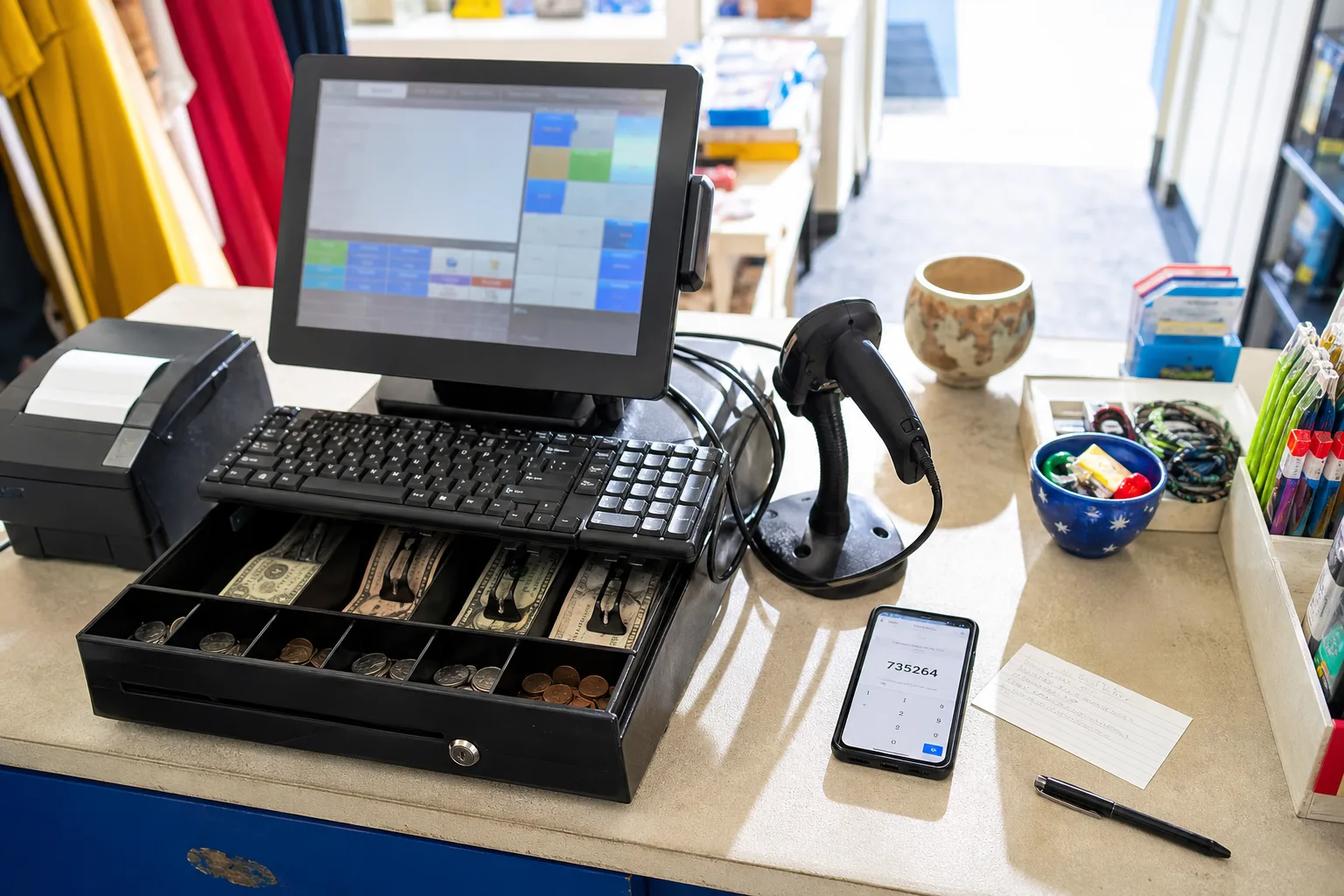
Walk into a two-chair salon, a three-truck HVAC outfit or a family pharmacy ten years ago and there was one login behind the counter. Everyone knew it. It was often written on a strip of masking tape stuck to the underside of the register drawer, or on an index card in the drawer with the spare keys, and it was the same password used for the scheduling software, the supplier portal and sometimes the shop email. Nobody thought of this as a security decision. It was a practical one, made so that whoever opened at seven could open.
What the shared credential actually bought, and what it cost
The appeal was real and worth stating plainly: one password meant no lockouts, no support calls to the software vendor at the start of a shift, and no owner driving in to unlock a terminal. The cost showed up only twice. First, when something went wrong on a ticket and there was no way to tell which of five people had voided the sale, because the system recorded one user for all of them. Second, when somebody left. A departing employee did not have to steal anything to keep access. They simply still knew the password, and so did their cousin, who had covered a Saturday in March.
The same shop now, and what replaced the index card
The arrangement that has taken its place at shops of that size is not complicated, and it is cheaper than most owners expect. Each person gets a named account in the scheduling or point-of-sale system, priced per seat, which is the line item that used to make owners balk and now usually runs low enough that one avoided dispute pays for a year. The passwords themselves live in a password manager with a shared folder, so the front desk still does not have to memorize anything. What changed is that access is granted per person, and it can be pulled per person, in about a minute, without disturbing anyone else's day.
The second change is the second factor. A code from an app, or a prompt on a phone, now sits in front of the accounts that matter most: the business bank login, the payroll portal, the domain registrar and the email account that can reset everything else. Not every terminal in the shop needs it. The list of accounts that genuinely do is short, and writing that list down is the actual piece of work. Most owners find it takes an evening. The National Institute of Standards and Technology is the body responsible for federal guidance on digital identity, and the direction of that guidance over the past decade has been toward longer passphrases, fewer forced resets and a second factor where the stakes justify it.
The offboarding hour, which is the whole point
Here is the narrow case that decides whether any of this was worth doing. An employee gives notice on a Friday. Under the old arrangement, the honest answer was that you changed the shared password, told the four remaining staff the new one, forgot the supplier portal, and discovered in August that the departed employee's phone was still receiving appointment notifications. Under the new arrangement, you open the admin panel of each system on your written list, deactivate one named user, and remove them from the shared folder in the password manager. Nobody else is locked out. Nobody has to learn a new password. The whole thing fits inside one cup of coffee.
Two items still need a human hand, and they are the ones people miss. Personal devices holding a saved session should be signed out remotely, which most business software now supports from that same admin panel. And any account tied to a phone number rather than a person, a two-factor code going to an employee's cell, should be moved before the last day rather than after it. Handled in that order, the departure is administrative. Handled in reverse, it becomes a phone call to someone who no longer works for you.
What year one teaches now
The training has shifted with it. An apprentice or a new hire ten years ago learned the shop password on day one, along with where the breaker panel was, and that was the extent of the instruction. What gets taught now, in the same first week, is narrower and more useful: how to log in as yourself, how to add a supplier credential to the shared folder rather than to a notes app, and who to tell when a login stops working. None of that requires technical aptitude. It requires that somebody set up the accounts properly before the new person arrived, which is a task for the owner and not the hire.
The tell, when you are looking at a business you might buy or a shop you might work for, is whether anyone can answer a simple question: what happens to the logins when someone leaves. A shop that can answer it in a sentence has usually done the rest of the work too.