Five Checks That Decide Whether Your Evidence Costs You Nothing or Thousands
Most of what makes a complaint file persuasive is captured in ordinary weeks for free; the rest has to be bought, and knowing which is which controls the bill.
| Published | Section | Law | |
|---|---|---|---|
| Author | Sebastian Kowalczyk | Reading time | 5 min |
The expensive part of a dispute is rarely the argument. It is the reconstruction: paying somebody, months after the fact, to establish something that a phone camera and a dated receipt would have established for nothing at the time. Most people arrive at a complaint with a folder that is thick and thin at once, full of material about how they felt and short of material about what happened. Sorting the two is a diagnostic job before it is a legal one, and the sorting itself is free. What follows is the order I would run the checks in.
1. Does the date come from somebody other than you?
A note in your own handwriting saying the leak started on a Tuesday is worth something, but it is worth much less than a text message sent that Tuesday, a bank posting date, a work order acknowledgment, or a photograph whose file carries the camera's own timestamp. The difference is who set the clock. Anything you can adjust after the fact invites the question of whether you did, and answering that question is where cost enters, because proving a document is what it appears to be is a specialist's job priced by the hour.
The week-to-week version of this is almost weightless. When a contractor tells you at the door that the vent will be re-run Thursday, send a short message that evening repeating it and asking him to confirm. When a store agrees to a return window, ask for it by email rather than nodding at the counter. Each of these takes ninety seconds and produces a record with a date somebody else's server applied. Six months later the same fact might cost a records request, a retrieval fee, and two weeks of waiting.
2. Who produced it, and what do they gain?
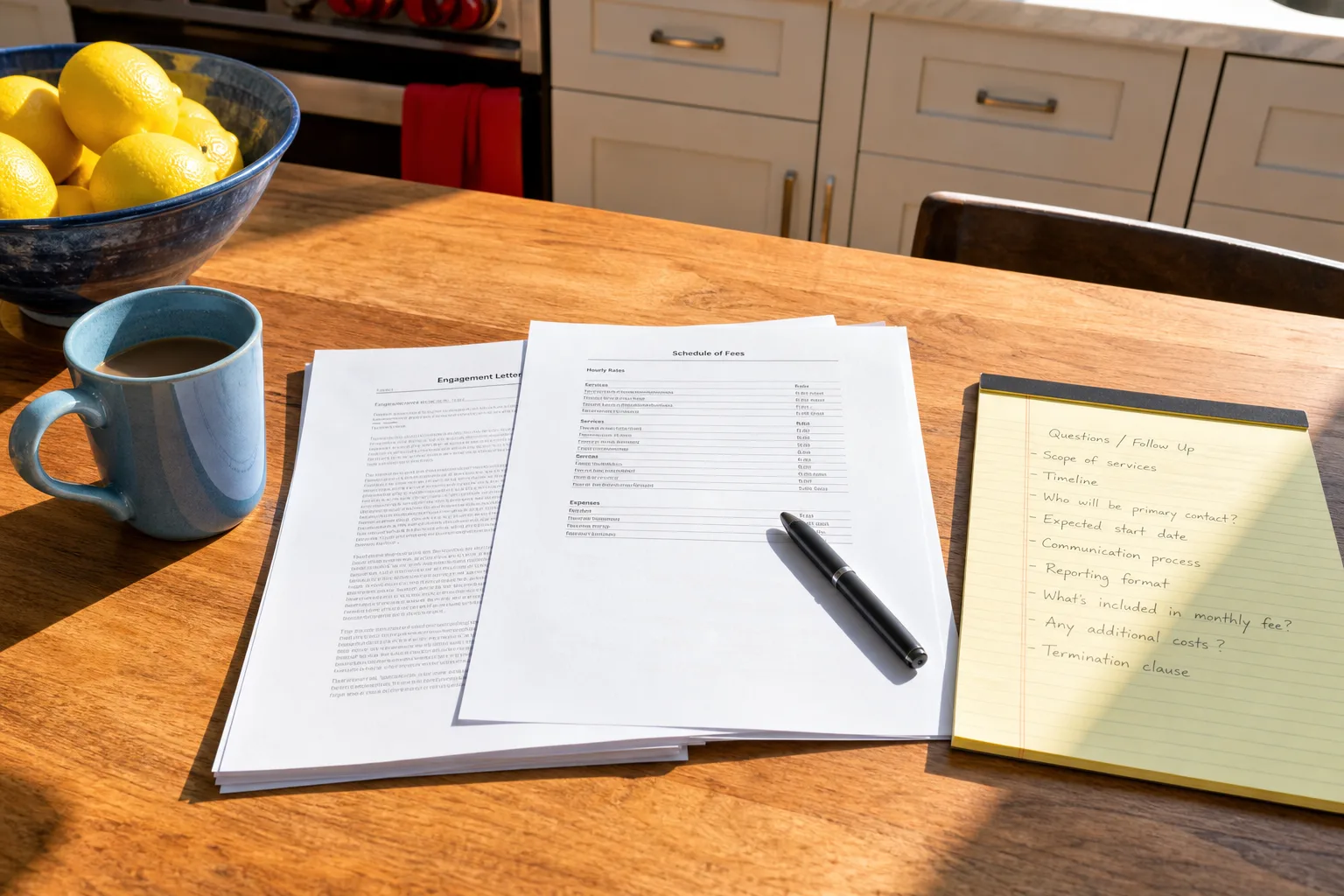
Evidence is priced roughly according to how independent its author is. Your own photographs cost nothing and carry the weakest presumption. A neighbor's statement costs a conversation and carries a little more. A licensed inspector's report, a plumber's written diagnosis, a laboratory result on a water or air sample, an engineer's letter on the cause of a crack: each of these carries considerably more, and each is billed like a small professional engagement, generally in the range of a partial inspection for the simpler ones and a half day or more of professional time for anything that requires a stamp and a signature.
What drives that price is not the finding but the exposure. A tradesman who writes down a cause is putting his license behind it, and he prices accordingly. This is also why the cheapest quote for an opinion is often the least useful one, because a two-line invoice noting "repaired leak" is not a diagnosis and will not survive a question. Ask what the deliverable is before you agree to the visit: a written report with photographs, readings, and a stated cause is a different product from a repair ticket, and it costs more for good reason.
3. Can you produce the whole of it, not the useful part?
Cropped screenshots are the most common weakness in an otherwise strong file. A single message showing a contractor agreeing to something reads very differently when the four messages around it show the condition he attached. The other side will ask for the surrounding material, and the request is reasonable, so the practical question is whether you can produce it easily or whether producing it becomes a project. Full exports of a message thread, complete email chains including headers, and unedited photographs are all easy to obtain in the week they are made and awkward to obtain later.
Cost enters when a device has been traded in, an account has been closed, or a thread has been deleted from one side. Recovering messages from a phone is forensic work, billed by the device and then by the hour of analysis, and it is one of the few line items in an ordinary consumer dispute that can outrun the amount in controversy. Exporting a thread to a PDF on a Sunday evening, and dropping it into a dated folder, removes that risk entirely for the price of the coffee you drink while doing it.
4. Does it show the cause or only the symptom?
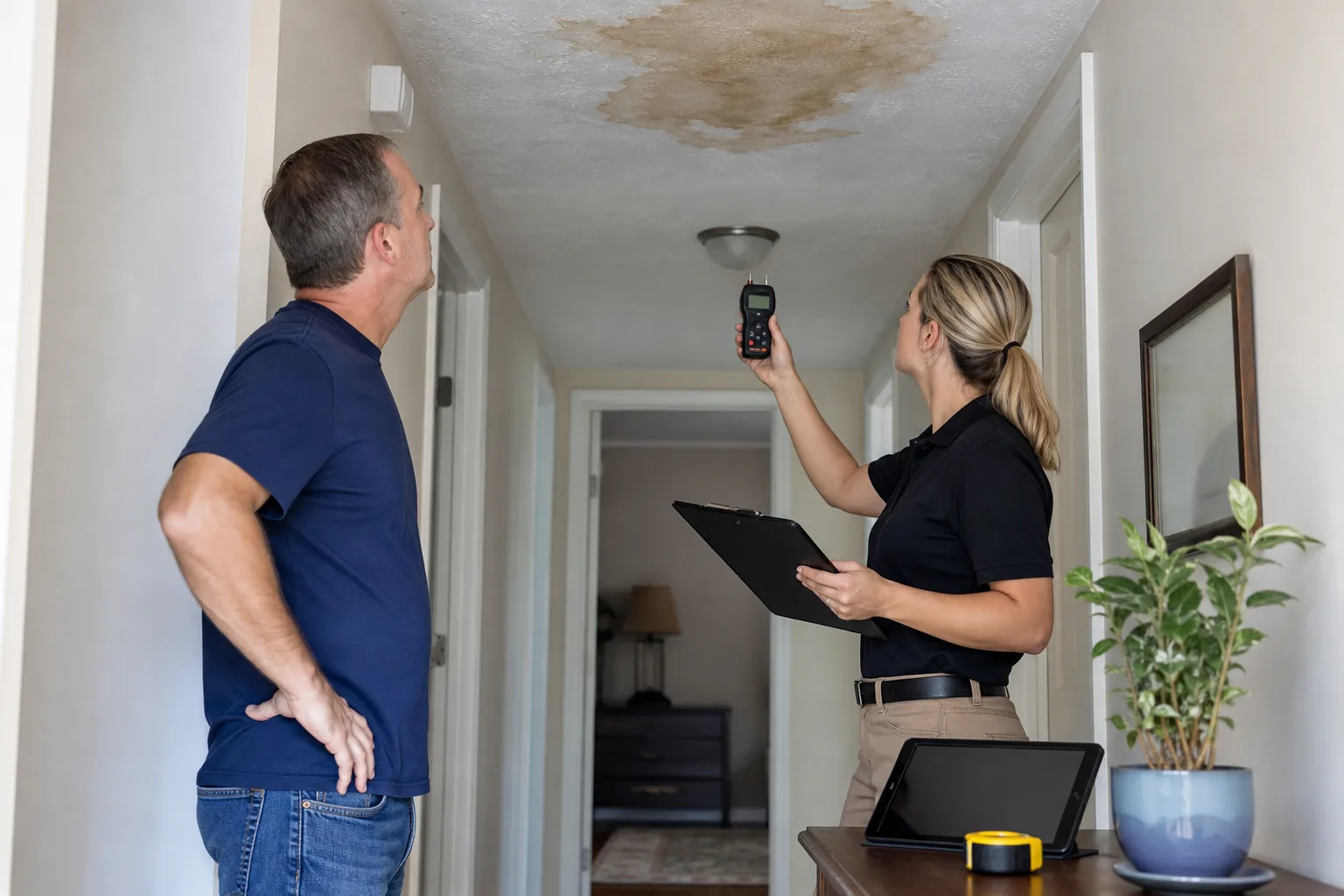
A photograph of a stain on a ceiling proves a stain on a ceiling. It does not prove a failed shower pan, a nail through a supply line, a roof valley, or condensation on an uninsulated duct, and any of those four might be the actual defect. Adjusters and opposing contractors know this, which is why symptom evidence tends to produce a settlement offer sized to the symptom. The moment your file moves from what you can see to why it is there, the conversation changes, because a stated cause assigns responsibility to a particular person on a particular date.
Buying cause evidence is where real money appears, and it comes in tiers. Moisture meter readings mapped across a wall are cheap and often decisive. A dye test, a smoke test, a pressure test on a line, or a camera run through a drain sit in the middle, priced like a service call plus equipment time. Destructive investigation, meaning opening a wall or lifting a section of roof and documenting what is behind it, is the expensive tier, because it carries the cost of the opening, the documentation, and the restoration afterward. Run the cheap tiers first, and stop when the cause is established.
5. Would a stranger understand it without you standing there?
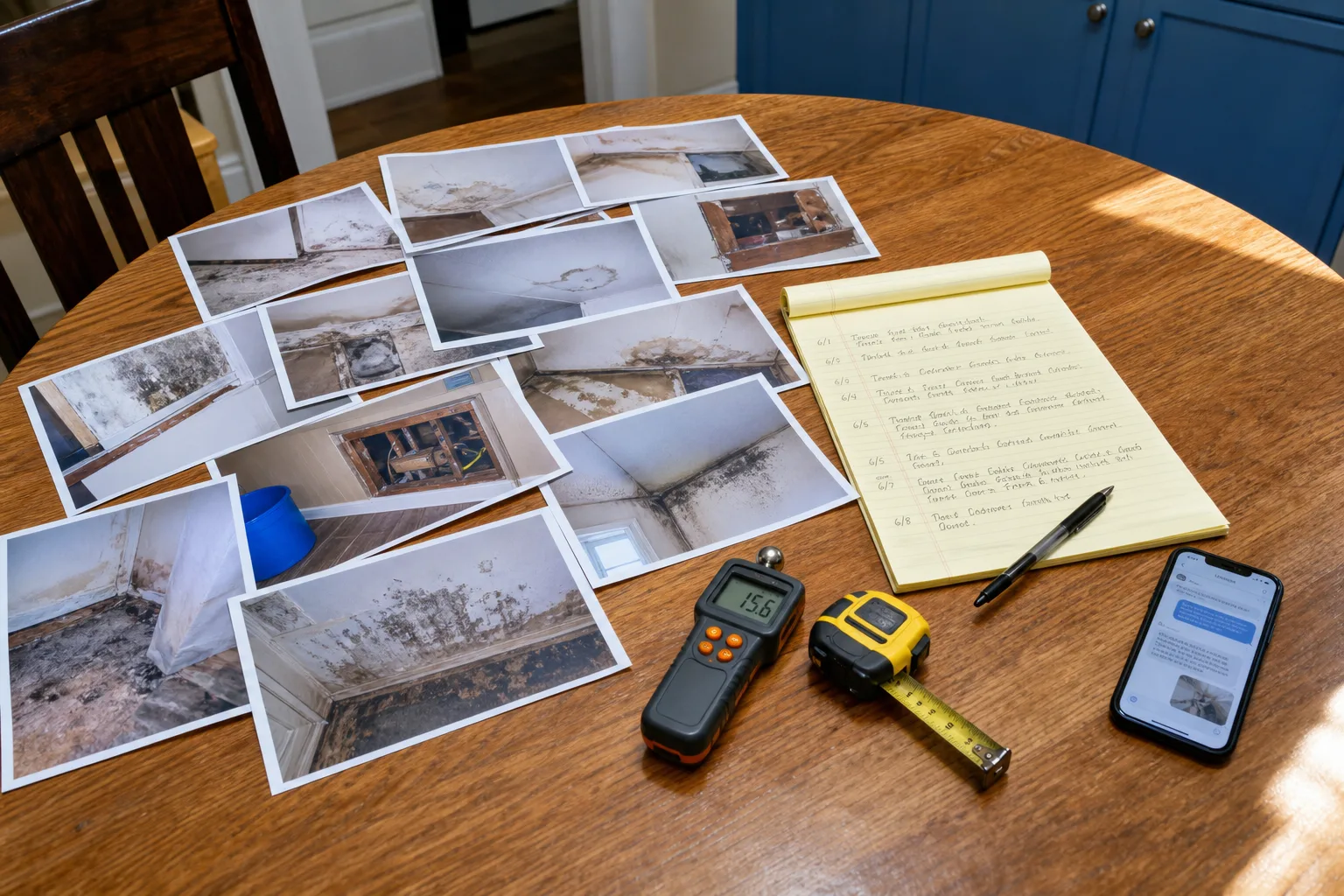
The person who eventually decides your complaint will not visit the property. They will read a file, probably quickly, in the company of forty other files. So the last check is whether each item explains itself: a photograph with a tape measure or a coin in frame for scale, a wide shot establishing where the close-up was taken, a one-line caption giving the date, the room, and what the reader is looking at. The Federal Trade Commission is the federal body responsible for consumer protection complaints, and its remit is a useful reminder that the audience is institutional, not personal.
This is the highest-return work in the entire process and it costs nothing but an hour. Ten well-labeled photographs beat two hundred unlabeled ones, and a two-page chronology with dates in the left margin does more than a box of paper. If a stranger reading your file has to ask you a question to understand any single item, that item is not yet finished. Fixing it now is free. Fixing it later means paying somebody to explain your own evidence back to the people you gave it to.
Run the five checks against what you already have before you spend a dollar on anything new. Most files pass three of them and fail on cause, which tells you exactly where the budget should go and, just as usefully, where it should not. A tested cause, a dated record from somebody else's system, and captions a stranger can follow will settle more disputes at the adjuster's desk than any amount of accumulated paper, and they are largely the product of ordinary weeks rather than emergency spending.