Filed a Claim in Storm Season? What the Calendar Quietly Changes About Your Adjuster
The month you file changes who inspects your house, what they can see, and how long the money takes. Here is how to work with that rather than against it.
| Published | Section | Homes | |
|---|---|---|---|
| Author | Sebastian Kowalczyk | Reading time | 6 min |
Two houses on the same street, the same broken supply line, the same carrier, the same policy form. One claim closes in nineteen days with a check that covers the work. The other takes eleven weeks, involves three different names on the correspondence, and ends with a supplement fight over cabinet boxes. The difference was not the policyholder, the damage, or the language buried on page fourteen. It was the week of the year the loss was reported, and what was happening two states over at the time. That connection is real, it is traceable, and almost nobody makes it.
The person assigned to you is a seasonal variable
Carriers staff for an average year and then absorb the years that are not average by borrowing capacity. After a hail swath crosses three counties or a named storm makes landfall, the staff adjuster who would normally handle a kitchen flood in a quiet month is reassigned, and your file lands with an independent adjuster working under contract, often licensed in your state but based somewhere else, carrying more open files than anyone would choose. That is not a scandal. It is arithmetic, and it is how the industry has always flexed. What it changes for you is the texture of every interaction that follows.
The practical consequences show up in small ways. A borrowed adjuster does not know which local restoration firms write honest scopes and which pad them, so nothing gets taken on trust and everything gets documented twice. They may not know that your municipality requires ice and water shield to a particular height, which means the code upgrade line you are owed has to be raised by you rather than found by them. And they hand the file off when their deployment ends, so the person who walked your house is not the person reading your emails in week six. None of this is fatal. It just means the burden of continuity moves to you.
The fix is unglamorous and it works. Ask, on the first call, whether the adjuster is staff or independent, and how long they expect to be assigned to the territory. Write the answer down with the date. Then keep every photograph, measurement and receipt in one place organized by room, because you will likely present the same file more than once, and the second reader will have no memory of the first walkthrough. Federal disaster response, which FEMA is responsible for coordinating after a declaration, adds another layer of activity in the same weeks, which is worth understanding as context rather than as competition.
What the weather lets anyone actually see
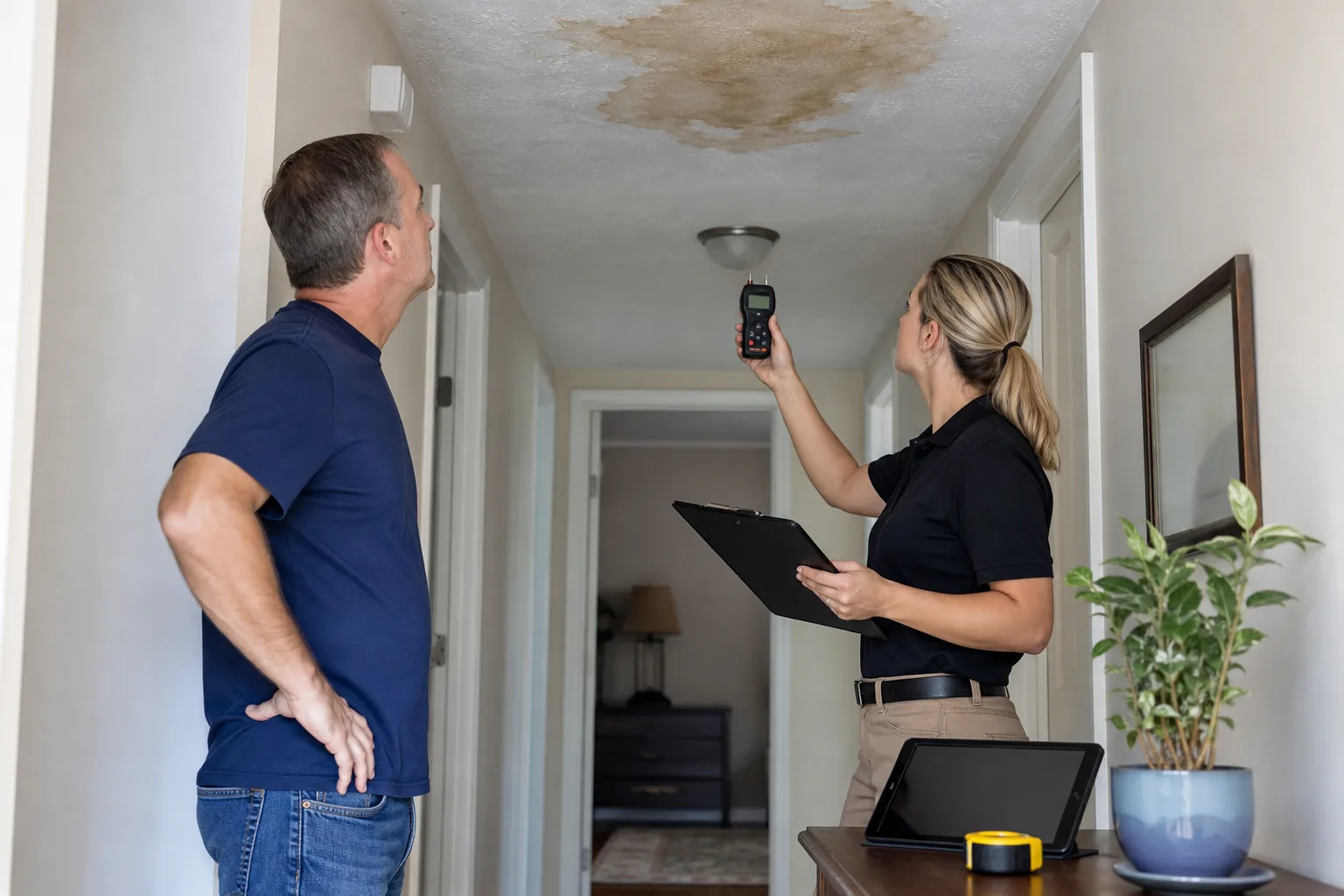
A roof inspection in February with four inches of crusted snow on the north slope is not an inspection. It is a visit. The adjuster can photograph the eaves, look at the interior staining, and confirm that water arrived, but the diagnosis, meaning whether the shingle mat is bruised, whether the granule loss is impact or age, whether the flashing failed at the chimney cricket, waits for a melt. Some adjusters will say so plainly and schedule a return. Others will write what they can see and close the file, and the difference between those two outcomes is frequently just whether the homeowner asked for a reinspection in writing before the report was issued.
Summer inverts the problem. Warm, humid air does not dry a wall cavity the way dry winter air does once heat is running, so an August water loss sits wet longer and the microbial clock starts earlier. That changes the scope in a specific way: more demolition, more containment, more equipment days, and a mitigation invoice that arrives before the structural estimate is even written. Adjusters who have handled a hundred of these will look at the ambient conditions on the loss date, not just the source of the water, and a homeowner who logs indoor temperature and humidity for the first seventy-two hours hands them the evidence that justifies the drying bill.
There is a third seasonal reading problem worth naming, which is the freeze loss that presents as a plumbing failure. A pipe that split at three in the morning in January will often be scoped as a burst line when the real fault is an uninsulated rim joist cavity or a supply run in an exterior wall, and treating the symptom means the same wall opens again next winter. Insurance pays for the sudden event, not the design defect, but the two conversations should happen together, once, while the wall is open and the photographs still exist.
Prices in the estimate and prices in the market
Estimating software updates material and labor costs by region on a cycle, and after a regional catastrophe the market moves faster than the cycle does. Shingles, plywood, drywall and crew hours all get bid up while a hundred thousand roofs compete for the same trucks, which means the printed estimate can be internally consistent and still fall short of what any available contractor will sign. This is the single most common cause of the gap between what a homeowner is paid and what the job costs, and it is almost entirely a function of the month.
The remedy is documentary rather than argumentative. Two or three written estimates from firms that will actually take the work, dated, on letterhead, with quantities that match the adjuster's scope line for line, make a supplement a clerical matter instead of a dispute. What does not work is a verbal claim that everyone is charging more. Adjusters hear that daily and cannot act on it. They can act on paper. Experienced contractors know this and will produce it without being asked; the ones who resist are telling you something about how the rest of the job will go.
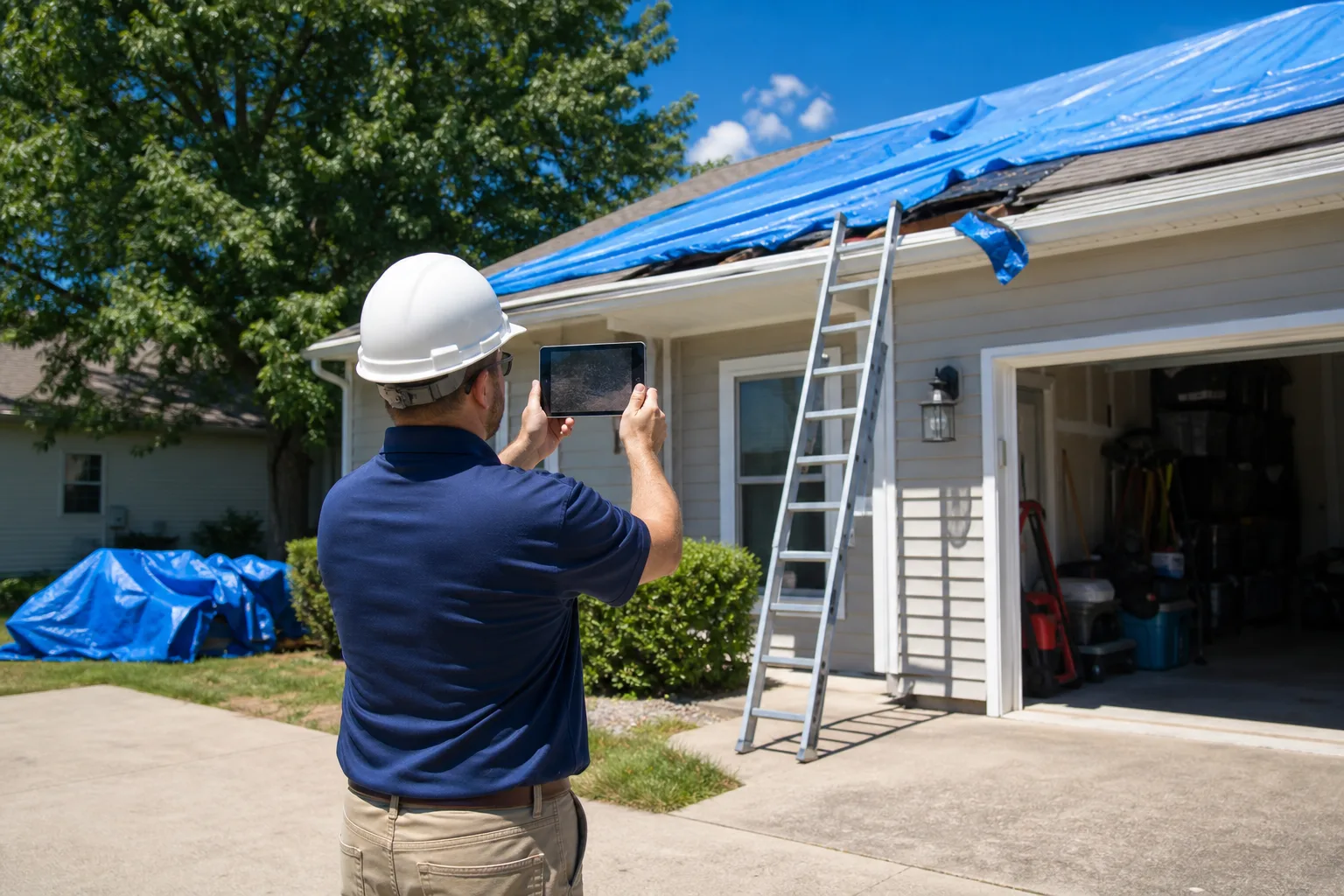
Timing the work has a second effect that shows up on the final number. A roof replaced in the six weeks after a hail event costs more and gets less careful crew attention than the same roof replaced four months later, when the storm chasers have moved on and local companies are hungry again. If the tarp is holding and the interior is dry, waiting is often the cheaper diagnosis, provided the claim itself is documented promptly and the carrier agrees in writing that the delay is a repair schedule and not an abandonment.
The consequences nobody traces back
Additional living expense coverage usually runs on a period of time or a dollar cap, and that clock does not pause because every drywall crew within sixty miles is booked. A family displaced in peak season burns through a hotel allowance during weeks when nothing is being built, then finds the coverage thin when work finally starts. Raising that early, and asking the adjuster to note the market conditions in the file, is what preserves an extension request later. The same logic applies to deadlines for submitting a proof of loss or completing repairs to collect recoverable depreciation.
The other quiet consequence is the quality of the record. Claims filed in a busy month generate more phone calls and fewer letters, because volume pushes everyone toward the fastest channel. Six months on, when a supplement is questioned, the phone calls do not exist. Sending a short email after every conversation, three sentences confirming what was said and what happens next, costs a minute and converts an oral file into a written one. It is the habit that separates claims that settle cleanly from claims that settle eventually.
Every one of these adjustments is available to a homeowner on day one, and none of them requires an argument. Ask who is assigned and for how long, note the conditions the inspection was performed under, put contractor pricing on paper, and confirm the calls in writing. The season decides the environment. The file you keep decides the result.