Burst Pipe in January, Roof Leak in August. What the Season Changes About Who Shows Up
Water damage response is now routed through national networks and insurer vendor programs, and the season decides how fast a crew arrives and who honors the work later.
| Published | Section | Homes | |
|---|---|---|---|
| Author | Adaeze Nwachukwu | Reading time | 4 min |
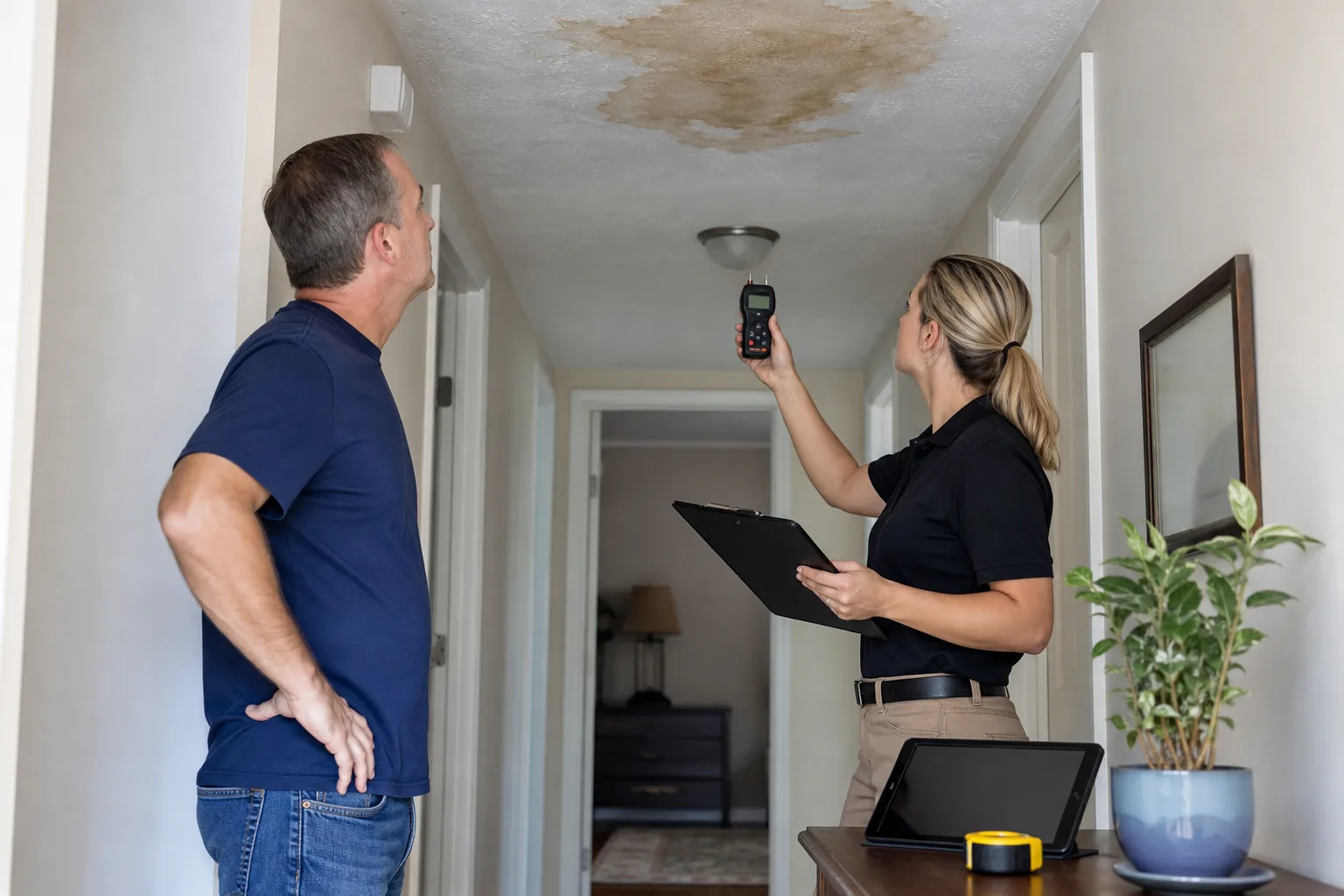
The phone number a homeowner calls at two in the morning almost never rings in the truck that arrives. It rings at a call center, often in another state, run by a national brand or by a third-party administrator that an insurance carrier pays to manage claims volume. That intake operator assigns the job to whichever local franchise or approved independent has capacity, and capacity is a seasonal quantity. The same policy, the same house and the same eight inches of water produce different arrival times in February than in August, and different paperwork behind them.
How dispatch stopped being a local phone call
Forty years ago a wet basement meant calling a carpet cleaner who owned a truckmount and a few blowers, and the price was whatever he said on the doorstep. Two things changed that. Restoration certification bodies published drying standards that turned the work into a documented process, with moisture readings, target values and a daily log, and carriers realized that a documented process could be audited and priced from a common estimating platform. Once the estimate could be standardized, the vendor could be managed at scale, and national programs grew up around the audit rather than around the drying.
The practical result is a two-layer industry. A brand name and a claims administrator sit above a local operator who owns the equipment, employs the technicians and signs the work authorization on your kitchen counter. The brand supplies the phone number, the software, the training and, importantly, the guarantee language. The local operator supplies everything you can actually see. Most of the time this arrangement works in the homeowner's favor, because a network can pull dehumidifiers and crews from three states away when one region gets hit at once.
Winter: the queue is the real variable
Freeze events do not produce one loss, they produce four hundred in a metropolitan area over about thirty-six hours, and they arrive in a cluster because every uninsulated supply line in the same building stock fails at roughly the same temperature. That is when the network layer earns its cut. The local franchise cannot staff for a once-in-five-years cold snap, so the brand deploys mutual-aid crews and rented equipment from unaffected markets. Arrival stretches from hours to a day or more, and triage becomes explicit: occupied living space and standing water first, finished basements later.
Winter also changes the physics in your favor once the crew is on site. Cold outside air holds very little moisture, so it dries a structure efficiently when the building is heated, and open-drying with the furnace running is genuinely effective in a way it is not in July. The tradeoffs are heat loss, frozen exterior lines that have not thawed yet, and the risk that a technician you have never met, working a fourteenth consecutive job, writes a thin moisture log. Ask for the first day's readings before the crew leaves.
Summer: humidity, the clock and catastrophe deployment
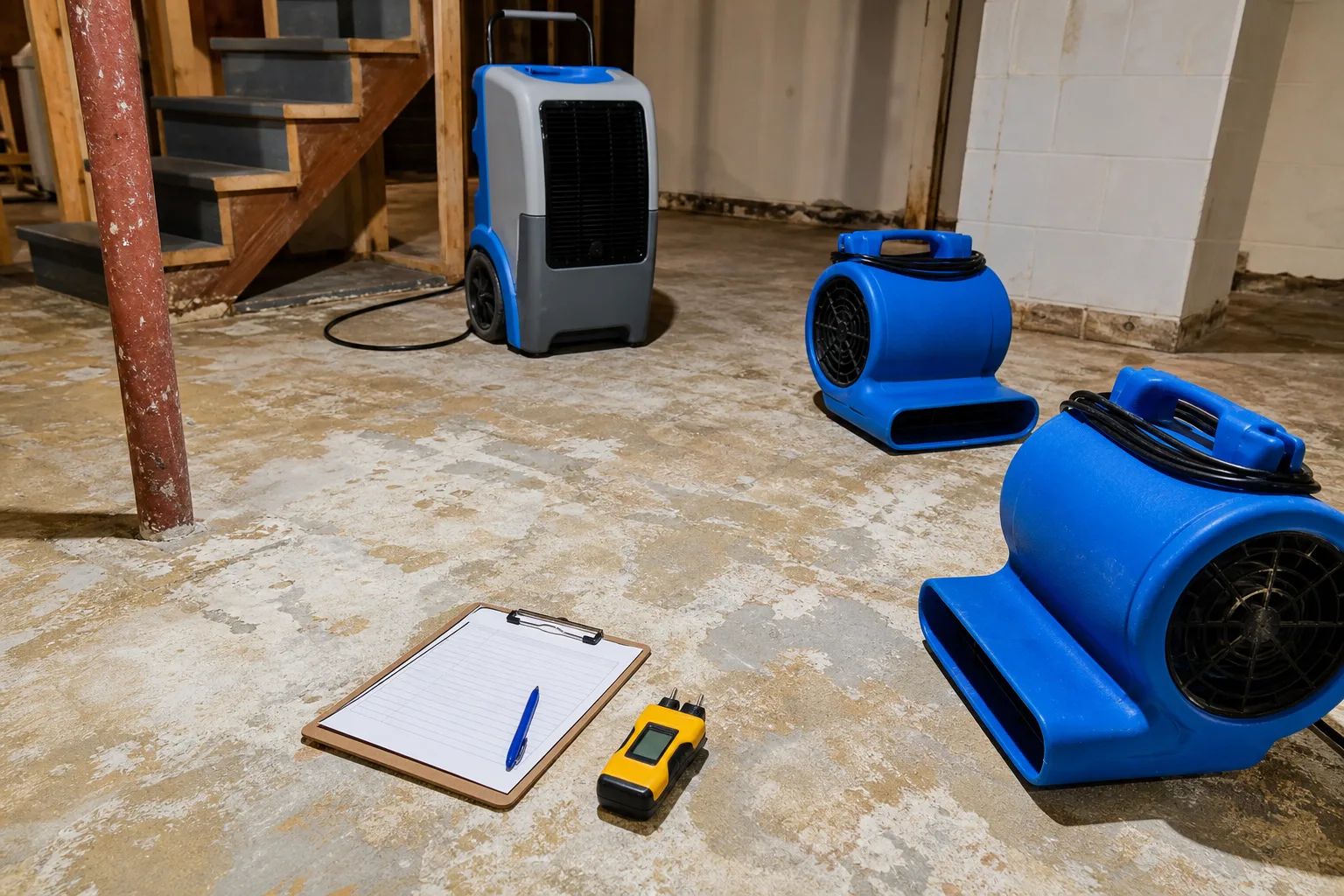
Warm-weather losses are usually roof, window, appliance or storm-driven, and they arrive with ambient humidity that makes open windows counterproductive. Drying then depends on closed-system dehumidification, which means more equipment, more electricity on your meter and a longer stay. The biological clock is faster too. The Environmental Protection Agency oversees indoor mold guidance, and the working assumption across the industry is that warm wet materials become a microbial problem quickly enough that the first forty-eight hours decide whether you are drying a house or demolishing part of one.
Hurricane and severe-storm season introduces the same queue problem as a freeze, with one difference: catastrophe response is often organized weeks in advance, with carriers pre-positioning adjusters and networks pre-committing crews to declared events. If your loss is a single burst hose in a coastal market during a deployment, you may find local capacity has already been spoken for. The counter to this is a call placed early to your own carrier's claims line, since a claim number opened before the surge tends to hold its place in the queue.
The guarantee, and who is standing behind it
Every national brand advertises a satisfaction guarantee on mitigation work, and the document that matters is not the website but the work authorization the technician hands you on a tablet at hour one. Read what it covers. Mitigation guarantees usually promise that the affected area was dried to an agreed standard, not that the structure will never be wet again, and they run for a defined window measured in months, not years. Reconstruction, if the same firm does it, carries a separate warranty on the rebuild, typically a year on workmanship.
Three clauses decide whether it is worth anything. First, what voids it: refusing recommended demolition, declining equipment for the full recommended run time, or turning the machines off overnight to sleep are all common exclusions, and all three are things homeowners do without realizing. Second, whether the obligation sits with the franchise entity or the parent brand, because those are different companies with different balance sheets. Third, what evidence you must produce, which in practice means the moisture log, the equipment placement sheet and the final readings.
Franchises close, sell and change owners, and a mitigation warranty from a company that no longer exists is worth what the parent chooses to make it worth. Some national brands will reassign the obligation to another franchise in the territory, and that willingness is stated in the paperwork if it is stated anywhere. Photograph the signed authorization before the crew leaves with the tablet, keep the daily logs, and note the corporate customer-service number separately from the local one. Those three items travel with you across an ownership change.
The season sets the queue, the humidity and the deadline. The network structure sets who answers, what they are permitted to bill and who is left honoring the drying certificate two winters from now. A homeowner who understands both is asking better questions at hour one, when the answers are still cheap and everything is still reversible.